JSR to Establish First Taiwan Photoresist Facility, Partnering with TSMC for Advanced Resist Development – Production Set for 2028
Breaking: JSR Announces Taiwan Photoresist Plant in Collaboration with TSMC
JSR Corporation, a leading Japanese semiconductor materials supplier, has revealed plans to build its first photoresist manufacturing facility in Taiwan, targeting a 2028 production start. The multi-million dollar plant will focus on co-developing advanced resists with Taiwan Semiconductor Manufacturing Company (TSMC), the world's largest contract chipmaker.

The initiative is a strategic move to close a competitive gap that has long left JSR at a disadvantage against its two main Japanese rivals, Tokyo Ohka Kogyo and Shin-Etsu Chemical. By embedding production closer to TSMC’s fabrication hubs, JSR aims to accelerate innovation and shorten supply chains for critical chipmaking materials.
Key Details of the Investment
According to sources familiar with the plan, the new facility will be JSR’s first photoresist plant outside Japan. It is expected to produce extreme ultraviolet (EUV) and high‑NA EUV photoresists, essential for manufacturing the most advanced logic chips.
“This partnership with TSMC enables us to develop next‑generation resists tailored to their process nodes, giving JSR a direct pipeline to the world’s most advanced semiconductor fabrication,” said a JSR spokesperson. The company declined to disclose the exact investment amount but confirmed it will be a multi‑million dollar project.
Industry Context and Background
Background
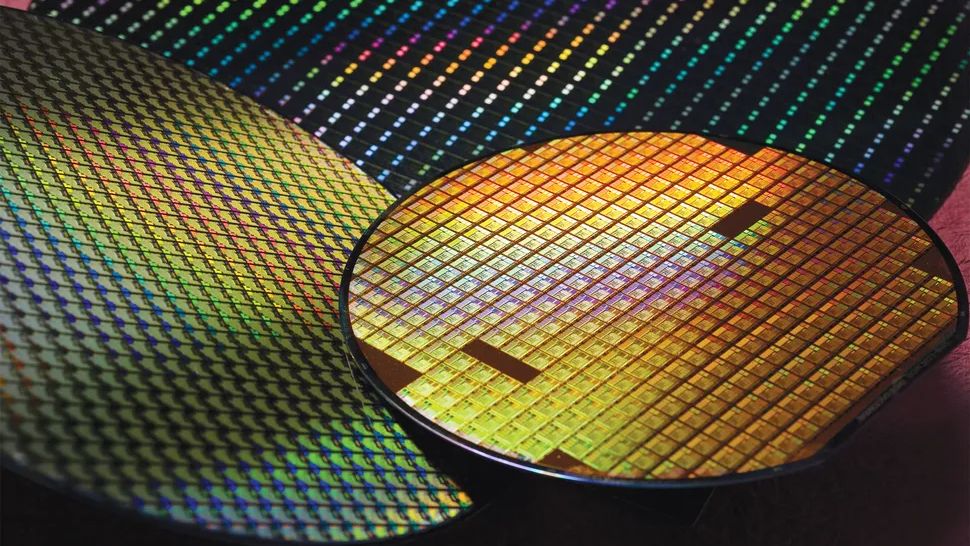
Photoresists are light-sensitive chemicals used to pattern circuits on silicon wafers. As chip geometries shrink to 3 nm and below, the performance and purity of these materials become critical. TSMC is currently ramping 3‑nm production and developing 2‑nm technology, requiring ever more advanced resists.
JSR has historically trailed its domestic rivals in capturing TSMC’s business. Tokyo Ohka Kogyo and Shin‑Etsu Chemical have long supplied the bulk of TSMC’s photoresist needs. The new Taiwan plant is designed to reverse that trend by co‑locating development and manufacturing with TSMC’s R&D teams.
What This Means for the Semiconductor Industry
What This Means
The move signifies a deepening of the Japan‑Taiwan semiconductor alliance and could reshape the global photoresist supply chain. By producing in Taiwan, JSR reduces logistics risks and allows faster iteration on resist formulations—critical for hitting TSMC’s aggressive roadmaps.
Industry analysts see this as a direct challenge to the dominance of Tokyo Ohka and Shin‑Etsu. “If JSR successfully co‑develops resists with TSMC, it will gain a first‑mover advantage in the 2‑nm era,” said Dr. Linda Chen, a semiconductor materials analyst at TechInsights. “This plant could become a blueprint for other materials suppliers looking to embed themselves in leading foundries.”
Timeline and Next Steps
Construction is expected to begin in late 2025, with equipment installation and pilot runs scheduled throughout 2027. JSR aims to achieve full commercial production by 2028, aligning with TSMC’s planned rollout of 2‑nm technology.
The company also plans to hire local talent in Taiwan, including chemists and process engineers, to staff the facility. JSR’s global CEO, Hideya Saito, has emphasized that “this investment underscores our long‑term commitment to TSMC and the broader Taiwanese ecosystem.”
Implications for Competitors
Tokyo Ohka and Shin‑Etsu are likely to accelerate their own on‑site development efforts near TSMC. However, JSR’s plant gives it a unique co‑development framework that could yield proprietary resists unavailable to rivals.
Both Japanese competitors have existing supply agreements with TSMC, but they lack a dedicated co‑location facility. The new JSR plant, therefore, represents a strategic inflection point in the materials supply chain for leading‑edge chips.
Summary of Key Points
- Location: Taiwan (site not yet disclosed)
- Partner: TSMC (co‑development of advanced resists)
- Production start: 2028
- Investment: Multi‑million dollars
- Strategic goal: Close competitive gap with Tokyo Ohka and Shin‑Etsu
Expert Reactions
“This is a watershed moment for the photoresist market,” commented Professor Kenji Nakamura of the University of Tokyo’s Institute of Industrial Science. “Having a dedicated plant next to TSMC will allow JSR to develop materials in parallel with process development, drastically reducing time‑to‑market.”
TSMC has not officially commented on the partnership, but industry insiders say the foundry has been pushing for more localized material supply to avoid future disruptions.
This story is breaking and will be updated as more information becomes available.
Related Articles
- Forgejo Security Flaw Exposed via Controversial 'Carrot Disclosure' Tactic
- How to Choose the Perfect Dyson Vacuum Without Overspending: A Smart Buyer's Guide
- WHOOP Introduces Doctor Video Consultations: Key Q&A
- Mastering Fin Operator: A Comprehensive Guide to AI Agent Management
- React Native 0.83: 8 Game-Changing Features That Redefine Mobile Development
- Everything About Researchers Discover Critical GitHub CVE-2026-3854 RCE Flaw ...
- Designing with Empathy: A Step-by-Step Guide to Preventing Exclusion
- Rust 1.94.1: Key Fixes and Security Update – Q&A