Asteroid Trajectories Unveil a Faster Path to Mars: Round Trips Under a Year
Introduction
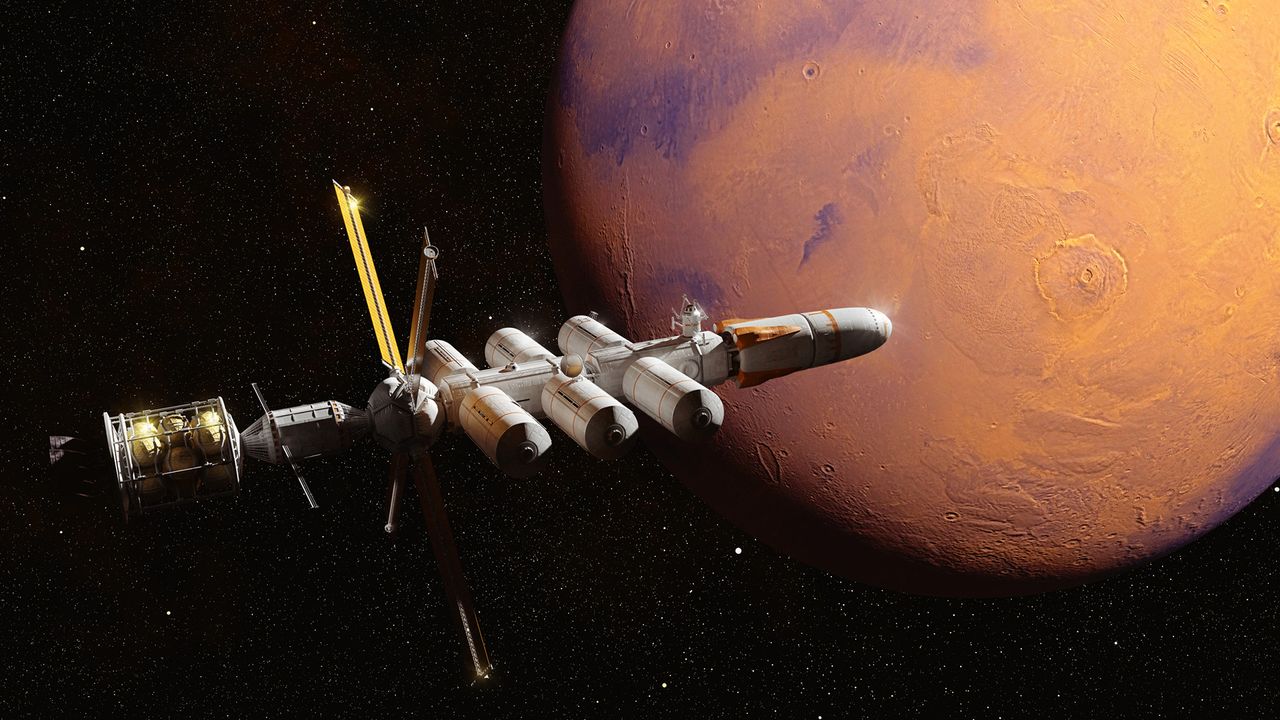
In the quest to make Mars travel more practical, a serendipitous discovery has emerged from the analysis of early asteroid trajectory data. Researchers have found that certain asteroid flybys can be leveraged to significantly shorten travel times to the Red Planet. This breakthrough suggests that round-trip missions could be completed in less than a year, a dramatic improvement over the current two-to-three-year timeline. The finding, published in a new study, challenges conventional mission design and opens up exciting possibilities for future exploration.
The Accidental Discovery
Dr. Elena Marchetti, a planetary scientist at the Institute for Advanced Space Studies, was initially investigating asteroid orbital data for a separate project on near-Earth objects. While modeling the gravitational effects of asteroids on spacecraft trajectories, she noticed an intriguing pattern: certain asteroids could act as natural slingshots, accelerating a spacecraft toward Mars with remarkable efficiency. “I was not looking for this,” she recounted. “The data just showed that by aligning a Mars mission with a specific asteroid flyby, we could cut travel time by more than half.”
The study, published in Acta Astronautica, details how early asteroid trajectory data—often collected for planetary defense purposes—can be repurposed to design faster interplanetary missions. The key lies in the precise timing of launch windows that coincide with asteroids passing close to Earth. By using the asteroid’s gravity to boost the spacecraft’s velocity, the required fuel is reduced and travel time is slashed.
How the Shortcut Works
Gravity Assist from Asteroids
Gravity assists are a well-established technique in space exploration, commonly used with planets like Jupiter or Saturn to accelerate probes to distant destinations. However, using asteroids for this purpose is a novel approach. Asteroids have much smaller masses than planets, but they can still provide a useful velocity boost if the spacecraft gets close enough. The study shows that by targeting asteroids with a specific orbital alignment, a spacecraft can gain up to 6 km/s of additional speed—enough to cut the one-way transit time to Mars from about eight months to just under four months. For round trips, this means the total mission duration could drop from two to three years to less than one year.
Optimal Asteroid Candidates
The researchers identified a handful of near-Earth asteroids that offer the best opportunities for this shortcut. These include 2000 SG344 and 2021 PH27, both of which have orbits that bring them close to Earth at regular intervals. The study provides a table of favorable launch windows between 2030 and 2040, showing that missions launched during these windows could benefit from multiple asteroid flybys to further reduce travel time.
Implications for Mars Exploration
The ability to reach Mars faster has profound implications for human exploration. Shorter missions reduce astronauts’ exposure to cosmic radiation, mitigate the psychological stress of isolation, and lower the risk of equipment failure over extended periods. Moreover, a round trip under a year would allow for more frequent crew rotations and resupply missions, accelerating the establishment of a permanent Martian base.
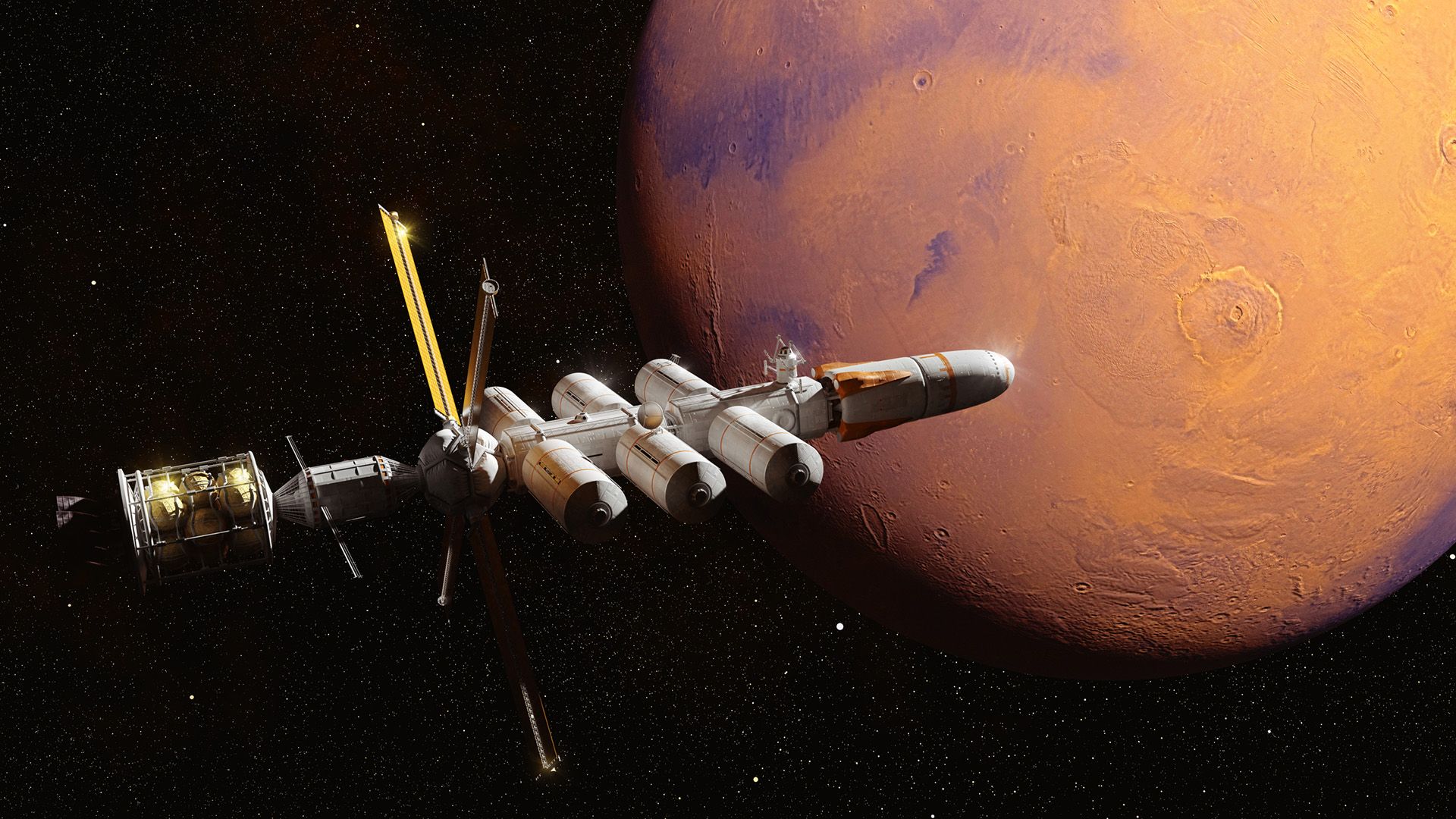
“This isn’t just about speed,” says Dr. Marchetti. “It’s about making Mars accessible in a sustainable way. Every day we cut from the journey reduces cost and risk.” The study also notes that the asteroid flyby technique could be applied to other destinations, such as outer planet moons or even interstellar precursors, once the data are integrated into trajectory optimization models.
Challenges and Next Steps
Despite the promise, several challenges remain. Timing is critical: launch windows that align with the right asteroid occur only every few years. Moreover, the spacecraft must be equipped with fast-acting propulsion systems to adjust its path precisely during the flyby. The study suggests that ion thrusters or nuclear thermal propulsion could complement the gravity assist. Further research is needed to characterize the asteroids’ compositions and orbits with high precision to avoid any collision risk.
NASA and ESA have expressed interest in validating the concept with a robotic precursor mission. The Mars Asteroid Flyby Test (MAFT) concept proposed by the study would send a small probe to demonstrate the technique as early as 2030. If successful, crewed missions could follow in the late 2030s.
Conclusion
This accidental discovery exemplifies how serendipity in science can unlock new pathways. What began as a routine analysis of asteroid data has blossomed into a potential game-changer for interplanetary travel. By repurposing existing astronomical data, humanity may soon travel to Mars in half the time—or less—making the dream of a multi-planetary species more achievable than ever.
For those interested in the technical details, the full study can be accessed via the references section below. Meanwhile, the broader implications for mission design are discussed in the Implications section above.
As Dr. Marchetti concludes, “Sometimes the best discoveries come when you’re not looking for them. This shortcut to Mars is a reminder to always follow the data.”
Related Articles
- AI Efficiency May Be Silently Eroding Team Trust, Warn Researchers: The Hidden Cost of the 'Bug-Free' Workplace
- How to Interpret China’s New ‘Strict Control’ Policy on Fossil Fuels: A Step-by-Step Guide
- How to Effectively Advocate Against Climate-Exacerbating Policies: A Step-by-Step Guide
- The Gentlemen RaaS and SystemBC: An Inside Look at a Growing Threat
- Deep Sea Sanctuaries: A Step-by-Step Guide to Squid Survival Through Extinction Events
- Redefining Dinosaur Life: New Discoveries Reveal Unexpected Complexity
- Clean Room Upgrades Pave the Way for Roman Space Telescope Processing at Kennedy
- Consciousness May Be Universe's Deepest Layer, New Theory Proposes