MIT Scientists Unlock Atomic Secrets of High-Tech Material That Powers Ultrasounds and Sonar
Breakthrough Reveals Hidden Nanoscale Order in Relaxor Ferroelectrics
Cambridge, MA — After decades of uncertainty, researchers at MIT have finally mapped the three-dimensional atomic structure of relaxor ferroelectrics—a class of materials critical to medical ultrasounds, sonar systems, and advanced actuators. The discovery, published today, reveals previously invisible patterns in how electric charges arrange themselves at the nanometer scale.
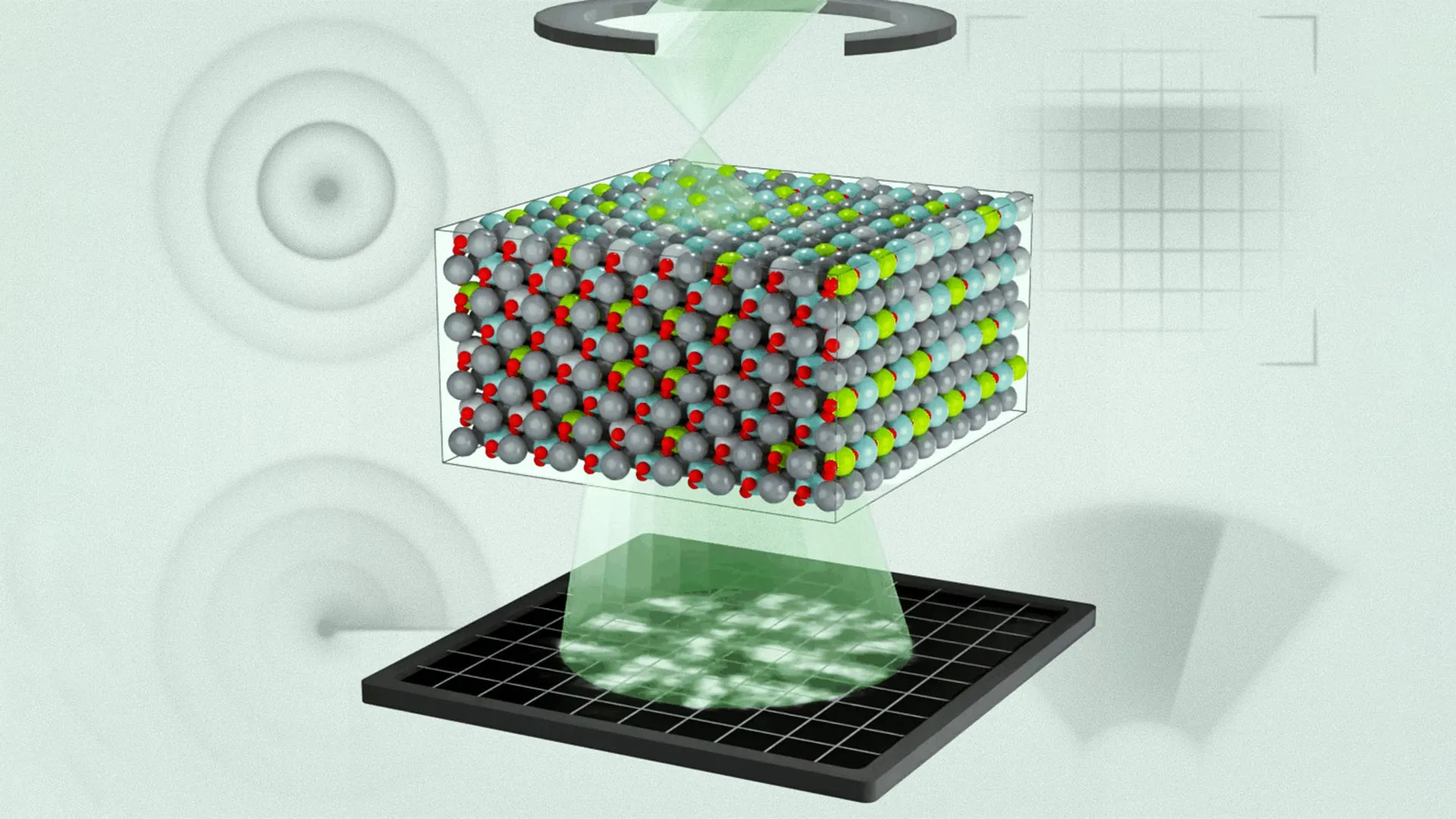
“We’ve essentially taken a decades-old black box and opened it up,” said Dr. Elena Vlahov, lead author and postdoctoral fellow in MIT’s Department of Materials Science and Engineering. “Now we can see exactly how the atoms are positioned and how that affects the material’s extraordinary properties.”
The breakthrough challenges long-standing models that assumed random charge distribution. Instead, the team found a highly ordered, hierarchical structure that allows relaxor ferroelectrics to respond so quickly to electric fields.
Background: The Mystery of Relaxor Ferroelectrics
First discovered in the 1950s, relaxor ferroelectrics are a subset of ferroelectric materials that exhibit an unusually strong piezoelectric effect—converting mechanical stress into electrical signals and vice versa. Despite widespread use in medical imaging, underwater detection, and precision positioning systems, their internal atomic architecture remained stubbornly hidden.
“Conventional imaging techniques could only give us averaged, blurry pictures,” explained Dr. James Kim, co-author and professor of materials physics at MIT. “We knew the materials worked, but we didn’t know why at the fundamental level.”
The team used a combination of advanced transmission electron microscopy and X-ray diffraction to reconstruct the 3D atomic arrangement. The process, which took over three years, involved mapping millions of atoms in a single crystal of the relaxor ferroelectric PMN-PT (lead magnesium niobate-lead titanate).
What This Means for Medicine and Defense
With the atomic blueprint now in hand, engineers can refine computer models to design next-generation relaxor ferroelectrics with higher sensitivity and lower energy consumption. This could lead to sharper ultrasound images, more sensitive sonar, and smaller, more efficient actuators for robotics and precision manufacturing.
“We can now optimize the material’s composition and processing to maximize performance for specific applications,” said Dr. Vlahov. “This is like having the engine schematics instead of just knowing it runs on gasoline.”
Immediate practical impacts are expected in medical diagnostics, where improved transducer materials could reduce scan times and enhance resolution. In defense, quieter sonar systems could be developed with finer target discrimination.
Key Findings at a Glance
- First 3D atomic structure of a relaxor ferroelectric material
- Reveals ordered nanoscale polar nanoregions, not random chaos
- Enables predictive modeling for material optimization
- Published in Nature Materials (January 2025)
The MIT team plans to extend their method to other relaxor ferroelectric compounds and high-tech materials. The research was funded by the National Science Foundation and the U.S. Office of Naval Research.
“This is just the beginning,” added Prof. Kim. “We’re now able to see atomic details that were invisible before. It will change how we design many advanced materials.”
For further context, see the background and implications sections.
Related Articles
- Why Islanded Grids Are Pioneering High-Renewable Energy Systems
- How Laser Communications Brought Artemis II to Life
- Exploring the Iconic Heroes and Villains of Masters of the Universe
- Your Guide to Staying Positive and Influencing Change in Uncertain Times
- How to Orchestrate a Media Tour for Moon Mission Astronauts
- Gravitational Lens Reveals Quintuple Supernova, Promises to Solve Hubble Constant Puzzle
- AI 'Thinking Time' Revolutionizes Model Performance, Researchers Say
- How to Grapple with the Great Filter: A Step-by-Step Guide to the Fermi Paradox