10 Lessons from the First Agent-Accelerated Software Project: Engineering at AI Speed
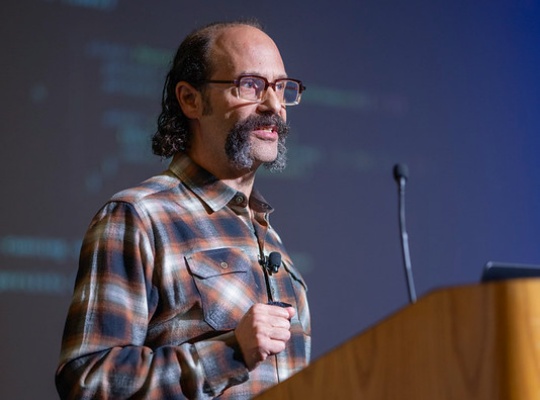
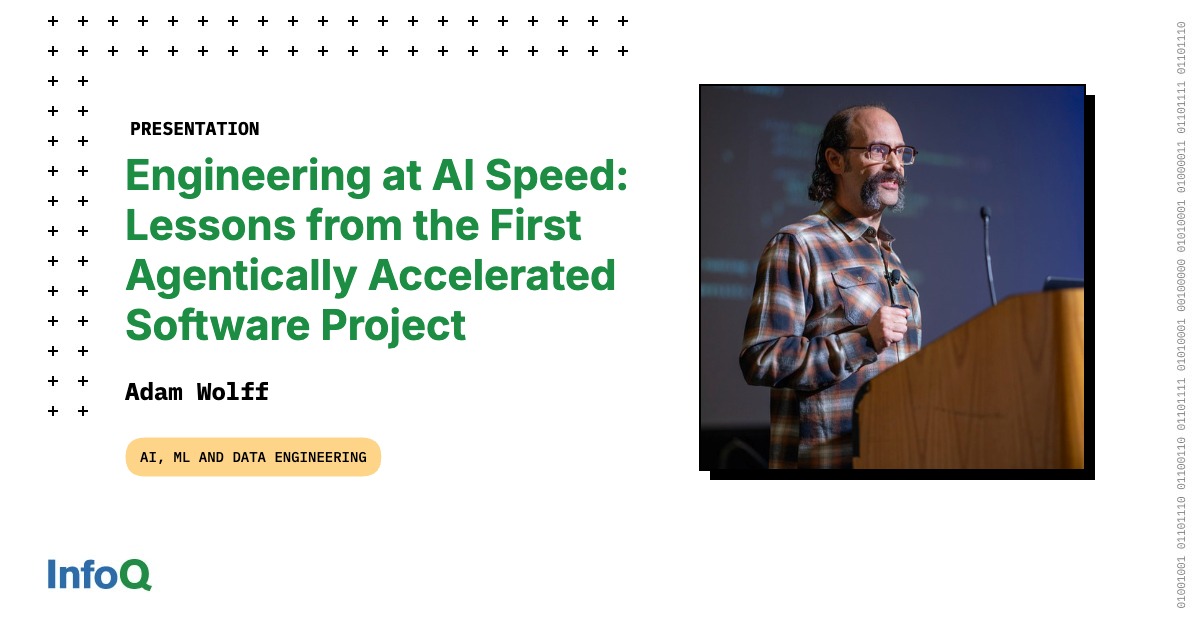
In a groundbreaking talk, Adam Wolff of Anthropic shared raw insights from building Claude Code, a project where AI transformed software development. This article distills his key takeaways into a numbered list, exploring how artificial intelligence shifts the SDLC bottleneck, why dogfooding matters, and why learning speed is the new competitive edge.
1. The Bottleneck Shifts from Implementation to Architecture
Traditionally, software development is constrained by coding time—writing, testing, and debugging. But with AI assistants like Claude Code, implementation becomes nearly instantaneous. The new bottleneck is architectural decision-making: choosing the right design, data flow, and system boundaries before any code is generated. Adam emphasizes that teams must spend more time upfront on high-level designs, as AI can quickly produce code from clear specifications. This shift requires engineers to think like architects, not just coders.
2. Dogfooding Is Non-Negotiable
Adam shares a 'war story' where building internal tools with Claude Code forced the team to eat their own dogfood. By using the agentic system daily, they uncovered quirks, speed bumps, and missing features that would never surface in controlled testing. Dogfooding revealed real user pain points, leading to rapid improvements. Without this practice, the product might have launched with critical flaws. The lesson: if you're building an AI tool, use it relentlessly for your own work better than any QA cycle can replicate.
3. Unshipping Is a Superpower
In an AI-accelerated world, you can ship features in hours, but not all of them are winners. Adam's second war story illustrates the importance of 'rapid unshipping'—quickly rolling back or removing code that doesn’t deliver value. Because AI lowers the cost of building, it also lowers the cost of undoing. The key metric becomes how fast you can learn from mistakes, not how long you avoid them. Embrace reversible decisions; unshipping is not failure, it’s fast learning.
4. Speed of Learning Is the Only Sustainable Advantage
When coding costs drop to near zero, competitors can replicate features instantly. Adam argues that the only moat is how quickly your organization can learn from users, market feedback, and experiments. AI amplifies this: you can test hypotheses, gather data, and iterate in days instead of months. The race is no longer about who ships first, but who learns fastest. Companies must optimize their feedback loops—shorter cycles, better metrics, and a culture that values insights over output.
5. Agentic AI Requires New Collaboration Models
In Claude Code, agents don’t just assist—they autonomously write, test, and deploy code. This changes how humans and AI collaborate. Adam notes that the role of engineers shifts from writing every line to reviewing, guiding, and setting constraints. Teams need to establish trust mechanisms, such as sandboxed testing and clear approval gates. The most effective setups treat AI as a junior developer who needs clear instructions and constant validation, but can execute at superhuman speed.
6. Three War Stories Reveal Common Pitfalls
Adam shared three specific 'war stories' from the Claude Code development. The first involved an agent misinterpreting a codebase structure, highlighting the need for explicit context. The second showed how an agent made recursive edits that broke the build, teaching the team to limit scope per task. The third illustrated an agent ignoring design constraints. Each story underscores that AI needs structured guardrails, precise prompts, and human oversight to avoid cascading errors.
7. Cost of Change Plummets, Bur Responsibility Grows
When coding is cheap, the risk of unintended technical debt skyrockets. Adam explains that every line generated must still be maintained, tested, and understood. The team found that AI could produce messy code quickly, requiring thorough reviews and automated quality checks. They implemented mandatory style guides and linting enforced by the agent itself. The lesson: AI doesn’t remove the need for software craftsmanship; it intensifies the importance of discipline.
8. Architecture Decisions Become More Frequent
With AI accelerating implementation, teams can reconsider architectural choices daily rather than quarterly. Adam’s team iterated on module boundaries and API designs continuously, using the agent to refactor large sections in minutes. This fluidity demands strong modularity and test coverage. They adopted a principle: 'design for replacement'—any component could be swapped out quickly if the learning showed a better approach. This agility is only possible because AI handles the grunt work of rewriting.
9. The Human Role Evolves from Coder to Curator
Engineers on the Claude Code project found themselves spending more time on prompt engineering, reviewing generated code, and defining acceptance criteria. Adam describes this as moving from 'doer' to 'curator'—your value comes from knowing what to build, not how to build it. This requires new skills: writing clear specifications, judging AI output, and debugging logical errors that the agent might introduce. Training programs must adapt to this new reality.
10. The Future Is Agent-Accelerated, Not Fully Automated
Adam concludes that the next wave of software development will be a partnership between humans and multiple specialized AI agents. Each agent handles slices: one for coding, one for testing, one for deployment. Humans orchestrate, define goals, and handle complex trade-offs. The mistakes made on Claude Code taught them that autonomy must be balanced with human control. The winning teams will be those that design this symbiosis best, focusing on learning over output.
Adam Wolff's presentation underscores a fundamental shift: AI doesn’t replace engineers—it magnifies their capability and forces a higher level of thinking. By embracing dogfooding, rapid unshipping, and a learning-first mindset, teams can harness AI speed without sacrificing quality. The lessons from the first agent-accelerated project are clear: the future belongs to those who can adapt their workflows, decision-making, and culture to an era where code is cheap, but good architecture is priceless.
Related Articles
- VideoLAN Releases dav2d: An Open-Source Decoder for the Next-Generation AV2 Codec
- 10 Essential Insights Into Python 3.15.0 Alpha 5
- A Step-by-Step Guide for Policymakers: Tackling Online Harm While Preserving the Open Internet
- A Policymaker’s Guide to Reducing Online Harm While Protecting the Open Internet
- Python Insider Blog: A Fresh Start with Open Source Contributions
- Stack Overflow’s 2008 Launch Forever Changed How Developers Learn – And That’s Rare in Programming
- 10 Savvy Ways to Maximize Valvoline Savings This May 2026
- Mastering GDB Source-Tracking Breakpoints: A Step-by-Step Guide