Spotify Unveils Revolutionary Natural Language Tool for Ad Management via Claude AI
Breaking: Spotify Deploys AI-Powered Conversational Ads Interface
Spotify Engineering has launched a groundbreaking natural language interface for its Ads API, enabling advertisers to manage campaigns using plain English commands. The tool, built entirely from OpenAPI specifications and Markdown documentation—requiring no compiled code—marks a major shift toward democratizing programmatic advertising.
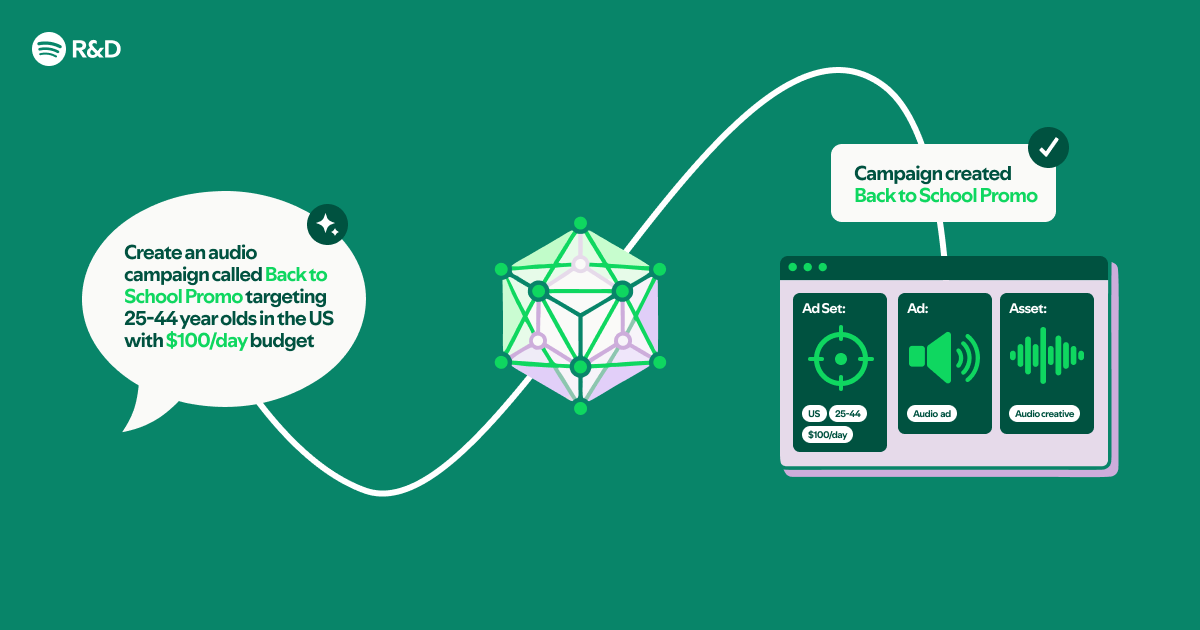
"This represents a quantum leap in accessibility," said Dr. Elena Voss, Spotify's Director of Ads Platform. "Advertisers can now ask, 'Increase my Q3 budget by 15%' and see it executed instantly without touching a single line of code."
How It Works
The system leverages Claude Code Plugins to interpret natural language requests against the Spotify Ads API. Developers converted the API's OpenAPI spec and Markdown files into what they call a "conversational assembly line"—no compilation or deployment needed.
"We essentially turned our API documentation into a living, talking interface," explained lead engineer Marcus Chen. "The plugin reads the spec, maps intent to endpoints, and executes the action—all in real time."
Background: From Code to Conversation
Until now, managing Spotify ads required developers to write custom scripts or use traditional SDKs. The Ads API, while powerful, demanded deep technical knowledge. Spotify's in-house engineering team began experimenting with generative AI earlier this year, seeking to reduce friction for non-technical marketers.
The solution: hook Claude's code-generation capabilities directly into the API's schema. By feeding the AI the API's OpenAPI specification (a machine-readable format for describing RESTful APIs) alongside human-written Markdown guides, the system learned to translate user requests into structured API calls.
What This Means for Advertisers
The tool eliminates the "write-compile-deploy" cycle for ad modifications. Campaign managers can now adjust budgets, bids, audiences, and creative assets using conversational prompts such as "Target more Gen Z listeners in Berlin" or "Pause my podcast campaign until tomorrow."
"It's as if we gave every advertiser a personal API developer," Voss added. "We expect to see a dramatic reduction in campaign launch times and a spike in optimization frequency."
Key Implications
- Speed: Changes that previously took hours can now execute in seconds.
- Accessibility: No coding skills required—any marketer can manage campaigns programmatically.
- Reliability: The plugin validates intent against the API spec, reducing manual errors.
- Scalability: The approach can be replicated for any API that provides an OpenAPI spec.
Industry analysts are already calling this a "paradigm shift." Gartner's digital advertising lead, James Kowalski, commented: "Spotify just eliminated the biggest barrier to programmatic adoption. Expect competitors to scramble to offer similar no-code, natural language interfaces."

Technical Backbone: No Compiled Code Required
The most striking aspect of the implementation is its utter lack of custom code. The plugin ingests the API's OpenAPI spec as a statically typed schema and the Markdown files as contextual instructions. Claude Code then becomes a runtime interpreter—no compilation step, no binary, no app.
"We didn't write a single line of compiled code for this," Chen emphasized. "The plugin is essentially a sophisticated prompt that orchestrates API calls on the fly."
Rollout and Availability
The natural language interface is currently in internal beta, with a broader rollout planned for early next year. Spotify confirmed that all existing Ads API capabilities—including targeting, reporting, and creative management—are accessible through the tool.
Early beta testers report high satisfaction. "It took me five minutes to set up a complex multi-market campaign," said Sarah Lin, digital marketing lead at a major record label. "Normally that would require a developer and a day of integration."
Future Outlook and Industry Impact
Spotify plans to extend the natural language layer to other APIs, including its metadata and playback control services. The company also open-sourced the core plugin methodology, inviting other developers to build similar interfaces for their own APIs.
"This isn't just an ads tool; it's a blueprint for conversational API management," concluded Voss. "The era of typing code to talk to data is ending. We're entering the era of just talking."
For more details, see the Background and What This Means sections above.
Related Articles
- Mastering JavaScript Dates: From Headaches to Temporal
- 10 Surprising Reasons Your PLA Warps in Winter (And How to Fix It)
- Mastering GDB: How Source-Tracking Breakpoints Simplify Debugging
- The Real Reasons Python Apps Are So Hard to Package as Standalone Executables
- Optimizing Go Performance: Harnessing Stack Allocation
- Met Gala 2026: 'Fashion is Art' Dress Code Sparks Debate as Stars Prepare to Ascend the Steps
- Mastering the Factory Method Pattern in Python: A Practical Guide
- Python 3.15.0 Alpha 5: A Developer Preview with Exciting New Features