Meta Escapes WebRTC 'Forking Trap' with Dual-Stack Architecture Across 50+ Services
Breaking News: Meta Overhauls WebRTC Strategy
MENLO PARK, CA – Meta has successfully migrated more than 50 real-time communication use cases from a divergent WebRTC fork to a modular architecture that stays continuously updated with the open-source upstream. The move solves a persistent industry problem known as the 'forking trap,' where internal modifications cause a project to drift away from community improvements.
“We built a dual-stack architecture that allows us to A/B test each new upstream release safely,” said a Meta engineering spokesperson. “This lets us serve billions of users without regressions while injecting our own proprietary components.”
Background: The Forking Trap
WebRTC is an open-source project that powers real-time audio and video across browsers and apps. Many companies fork it to add custom features or quick fixes. Over time, the fork diverges from upstream, making it costly and risky to merge new security patches or performance enhancements.
Meta’s challenge was amplified by its monorepo and the need to support diverse platforms – from Messenger and Instagram video chats to low-latency Cloud Gaming and VR casting on Meta Quest. A one-time upgrade could break experiences across billions of devices.
How Meta Solved It
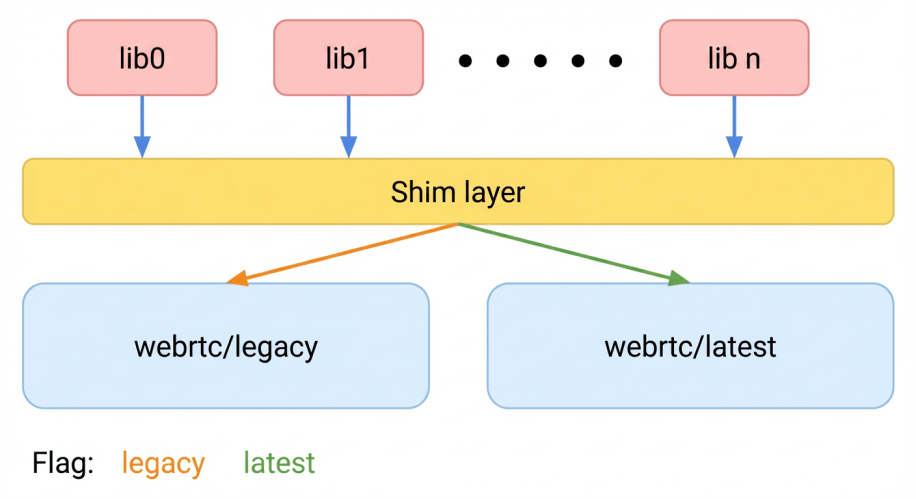
Instead of a single upgrade, Meta engineered a solution that statically links two versions of WebRTC within the same application. This violates C++’s One Definition Rule, causing symbol collisions. The team overcame this by designing a wrapper layer that isolates each version’s symbols, enabling both to coexist in the same address space.
“The key was building a dual-stack approach where the legacy and new versions run side by side,” the spokesperson explained. “We can dynamically switch users between them for A/B testing without rebuilding the app.”
This architecture was rolled out across 50+ use cases, including audio/video calls, real-time streaming, and gaming. The migration took several years and involved close coordination with the WebRTC upstream community to ensure patches remain clean.
What This Means
The new approach delivers measurable improvements: better performance, reduced binary size, and quicker access to upstream security fixes. Meta can now test every new WebRTC release in production before committing to a full rollout, reducing risk.
“This isn’t just a technical win – it’s a strategic shift,” said an industry analyst. “Other companies struggling with forked open-source projects may follow Meta’s lead.” The architecture is already in use for Meta’s real-time services, with plans to extend it to future products.
Key Benefits
- Continuous Upgrades: No more lagging behind upstream; each release is tested and merged quickly.
- Safe A/B Testing: Two WebRTC versions run simultaneously, allowing controlled rollouts.
- Improved Security: Faster adoption of vulnerability patches from the WebRTC community.
- Smaller Binary: The modular skeleton reduces bloat compared to the previous fork.
Industry Impact
Meta’s solution is published as a reference architecture for other developers. The company emphasized that the dual-stack design can be adapted to other open-source projects facing similar divergence issues. With WebRTC used by nearly every major communication platform, this approach could set a new standard for managing large-scale forks.
“We’re sharing this to help others avoid the same trap,” the spokesperson concluded. “Continuous alignment with upstream is critical for long-term maintainability.”
Related Articles
- Ploopy Unveils Bean: Open-Source Pointing Stick Mouse with Four Buttons and QMK Firmware
- Community-Designed April 2026 Wallpapers Now Available for Download
- 6 Key Insights About Rust’s Participation in Outreachy 2026
- New Surgeon General Nominee Nicole Saphier: Blending Medical Expertise with Media Presence
- How to Improve Open Source Documentation: A Case Study with Git
- Producing a Documentary on Open Source: A Step-by-Step Guide
- Rust Project Welcomes 13 Accepted Projects for Google Summer of Code 2026
- How to Succeed in Google Summer of Code with the Rust Project: A Step-by-Step Guide