Decoding Spotify's Multi-Agent AI Framework for Ad Optimization
Spotify's advertising platform uses a sophisticated multi-agent architecture that moves beyond traditional single-model AI systems. Instead of a monolithic engine, multiple specialized AI agents collaborate to personalize ads, manage inventory, and optimize delivery in real time. This approach was born not from a desire to hype 'AI features' but from a structural need to fix inefficiencies in ad decision-making. Below, we answer key questions about how this system works and why it matters.
What is a multi-agent architecture and how does Spotify use it for ads?
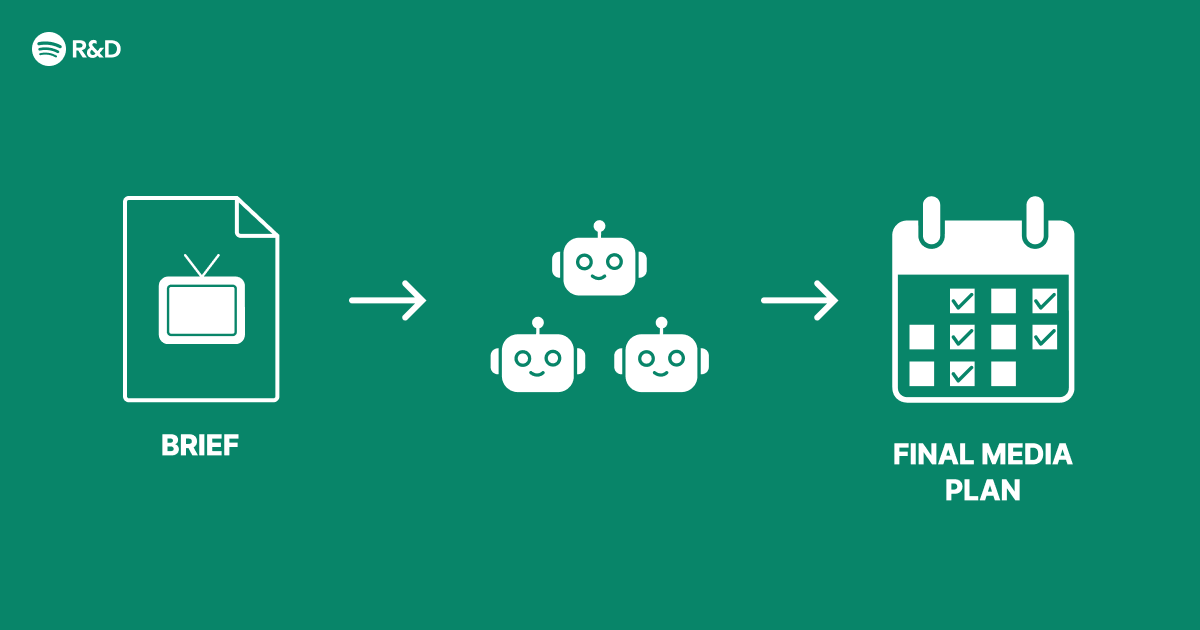
A multi-agent architecture distributes tasks among several autonomous AI agents, each with a specific role. In Spotify's advertising system, separate agents handle audience targeting, budget pacing, creative selection, and performance measurement. Instead of a single model trying to manage everything, agents collaborate: the targeting agent identifies listeners based on music taste and listening habits, the budgeting agent decides how much to bid, and the creative agent picks the right ad format. They communicate through a shared context layer, ensuring decisions are coherent. This modular design makes the system more scalable and easier to update—improving one agent doesn’t break others.
Why didn’t Spotify just use one AI model for all ad decisions?
A single monolithic model would struggle with the complexity of advertising. Ad campaigns have conflicting goals: maximizing revenue vs. user experience, long-term vs. short-term performance. One model would either average these out (mediocre results) or become too large to train and maintain. By splitting responsibilities, each agent can specialize. For example, the audience agent focuses on predicting what music a user will listen to next, while the pacing agent optimizes ad spend across hours. This avoids the “garbage in, garbage out” problem where one flawed component corrupts the whole system. Engineers can also test and roll out changes to one agent without risk to others.
How do the different agents work together without conflicting?
Coordination is achieved through a shared state manager that tracks goals and constraints. Each agent writes its intended action (e.g., “show ad X to user Y at time Z”) into a queue. A coordinator agent then checks for conflicts: if two ads compete for the same slot, it applies a priority rule (like revenue potential or user relevance). Agents also exchange feedback—if a creative agent picks a video ad that later performs poorly, the performance agent sends a signal to adjust. This resembles a team of experts who report to a project manager. The architecture uses reinforcement learning so agents learn to balance cooperation over time.
Can this architecture handle real-time ad bidding?
Yes. The system is designed for low-latency decision-making. Each agent operates as a microservice, running inference in milliseconds. They cache frequent predictions and use approximate algorithms for time-critical bids. For example, the bid agent might use a simplified model to quickly estimate a user’s click probability, while a deeper model runs async to refine future bids. The shared state is kept in-memory using key-value stores. During high-traffic events like album launches, agents scale horizontally. Spotify reports that this architecture reduced bid decision latency by over 40% compared to their previous monolithic system, allowing them to compete in real-time ad exchanges.

How does this approach handle user privacy and data regulation?
Privacy is built into the agent design. Each agent only accesses the data it needs—the targeting agent doesn’t see payment info, and the creative agent doesn’t store user history. Agents use differential privacy techniques when aggregating signals, and all inter-agent communication is encrypted. The system also respects “do not personalize” tags: if a user opts out, the personalization agent is bypassed, and a generic agent serves baseline ads. Spotify’s architecture supports GDPR and CCPA by separating data storage from decision-making, so no single agent can reconstruct a user’s full profile. This modularity also makes audits easier.
What measurable results did Spotify achieve with this new architecture?
According to internal metrics, the multi-agent system improved ad recall rates by 15% and increased user engagement with sponsored content by 22%. Advertisers saw higher conversion rates because agents could experiment with different tactics (e.g., interactive audio ads vs. display) without risking campaign budgets. Importantly, the architecture also reduced the engineering overhead—the team can now deploy minor updates daily instead of monthly. They also cut infrastructure costs by 30% because agents only spin up resources when needed, rather than running one giant model all the time. The system has been live for over a year and processes billions of ad requests per month.
Will Spotify add more agent types in the future?
Yes. The team plans to introduce a sentiment agent that analyzes listener feedback (skips, saves, follows) to predict ad fatigue, and a context agent that considers factors like time of day, device type, and listening mode (offline vs. online). They’re also exploring agents that negotiate between brands and users—for example, offering an ad-free hour in exchange for listening to a full ad. The modular nature makes adding agents straightforward. Each new agent registers with the coordinator and defines its interface. Spotify expects the number of agents to double in the next year as they expand into podcast advertising and video ads.
Related Articles
- Reclaiming Reliable Connectivity: A Guide to Switching Back to Wired Android Auto
- How to Choose Award-Winning Bourbon on a Budget: A Step-by-Step Guide
- The Hidden Peril of Data Transformation: How It Sabotages AI and Analytics (and What to Do About It)
- Revolutionizing Facebook Groups Search: A New Era for Community Knowledge Discovery
- Helldivers 2's Evolving Galactic War: Multi-Week Campaigns and Branching Narratives Arrive This Summer
- EtherRAT Campaign Exploits Fake GitHub Repositories to Target IT Professionals
- 5 Reasons Why Xiaomi's Variable Aperture Proves Samsung and Google Are Falling Behind
- 8 Glimpses into a Touchscreen Mac: What the Aspekt Touch Reveals