Breaking: Cosmic Rays May Trigger Lightning, New Research Reveals
New evidence suggests that high-energy particles from space, known as cosmic rays, could be the primary trigger for lightning on Earth, according to groundbreaking research led by physicist Dr. Joseph Dwyer. The findings, presented today at the American Geophysical Union meeting, challenge decades-old theories that lightning simply begins with ice crystals colliding inside clouds.
"We've known for years that the electric fields inside thunderstorms aren't strong enough to cause a spark on their own," said Dr. Dwyer, a professor at the University of New Hampshire. "Our observations suggest that cosmic rays—particles traveling near the speed of light—can initiate a runaway breakdown that ignites lightning."
Background
Dwyer's path to lightning physics began in space. Using sensors on NASA's Wind satellite, he studied solar flares and particle streams from the sun while the spacecraft orbited a million miles away from Earth.
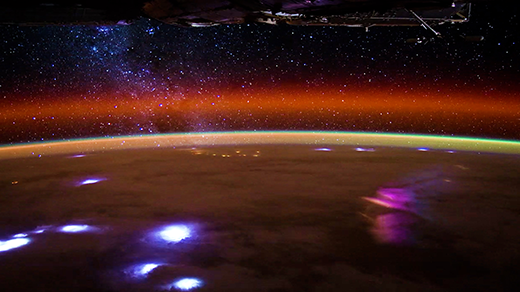
In 2000, he moved to Florida, a lightning hotspot, and shifted his focus to terrestrial storms. "I felt ready for something new," Dwyer recalled. Over the past two decades, he has developed the relativistic runaway breakdown theory, which posits that cosmic rays create a cascade of energetic electrons that carve a conductive path through the air.
Traditional models held that lightning initiates when ice and hail particles rub together inside clouds, building up static electricity until a spark jumps. However, laboratory experiments and field data have shown that the electric fields in real storms are far too weak to cause electrical breakdown.
What This Means
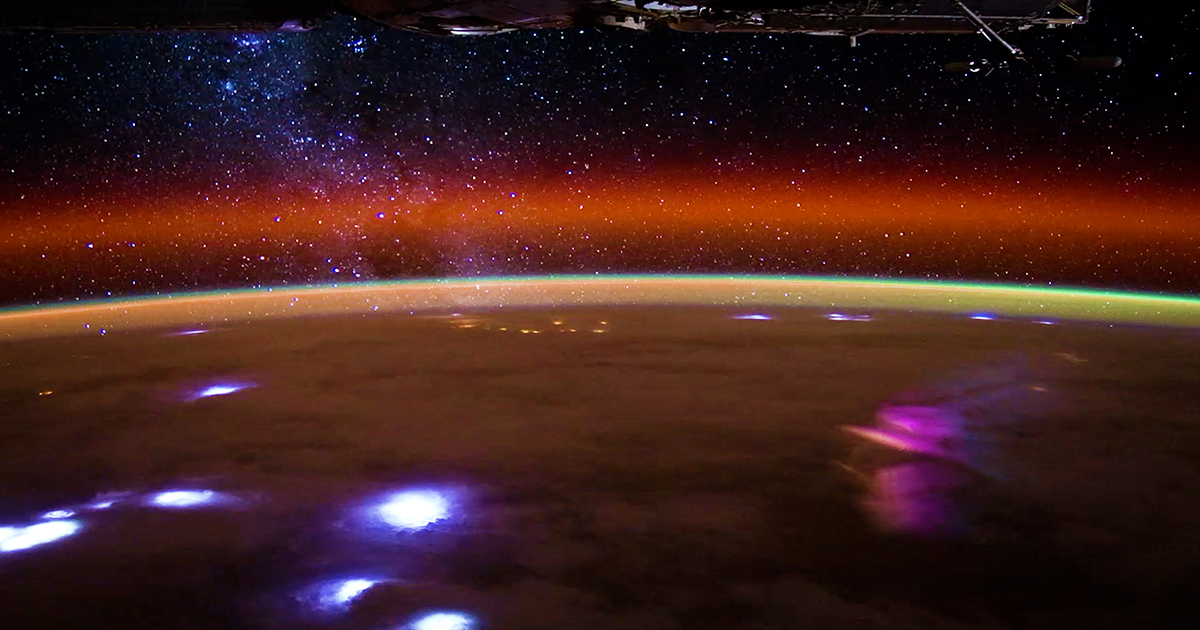
If confirmed, Dwyer's theory would overhaul how meteorologists predict lightning risk and improve safety for aviation, outdoor events, and power grids. "We're not just talking about a small tweak to weather models—this is a fundamental shift in understanding one of nature's most common yet dangerous phenomena," said Dr. Maria Rossi, an atmospheric scientist at MIT not involved in the study.
Dwyer's team plans to deploy a network of detectors across Florida's lightning-prone coastline to track cosmic ray showers in real time. "We need to see the entire chain—from a cosmic ray hitting the atmosphere to a bolt striking the ground," he said. "If we can predict lightning minutes in advance, we can save lives."
Critics caution that the hypothesis requires more direct observation. "Cosmic rays are everywhere, but lightning is rare per storm," noted Dr. James Park, a lightning researcher at the University of Washington. "The connection might exist, but proving causation is a huge challenge."
Dwyer acknowledged the hurdles: "Science moves slowly, but when the old answer doesn't fit new data, you have to be willing to question everything."
Related Articles
- How to Build an AI Agent That Knows When to Use Tools (and When Not To)
- The Invisible Threat: A Step-by-Step Guide to Understanding Methylsiloxane Air Pollution
- JWST Unveils Largest Map of Cosmic Megastructures: 'A New Window on the Universe'
- Empowering AI Agents with Secure Desktop Access: Amazon WorkSpaces Expands Capabilities (Preview)
- Navigating the Limits of AI in Extreme Weather Forecasting: A Practical Guide
- Google's Workspace Icon Overhaul Signals Brand-Wide Visual Shift; Fitbit Air, Samsung Glasses Also in Pipeline
- 7 Crucial Discoveries About the Anti-Cancer Plant Compound Mitraphylline
- Starship V3's Self-Inspection: What Makes Flight 12 Unprecedented?