How Plants Orchestrate the Mathematical Dance of Light Adaptation
Introduction
Living on light is a dangerous game. The sun's rays carry ultraviolet waves that can snap DNA strands and degrade molecules, while intensity varies wildly from soft morning light to blazing summer afternoons, from shade to full sun in seconds. Plants must endure and thrive through these extremes, turning a trickle or a deluge of solar calories into stable energy. Inside every plant cell, a hidden mathematical dance coordinates a precise response to these fluctuations. This guide breaks down how plants perform this dance, revealing the step-by-step process that ensures survival.
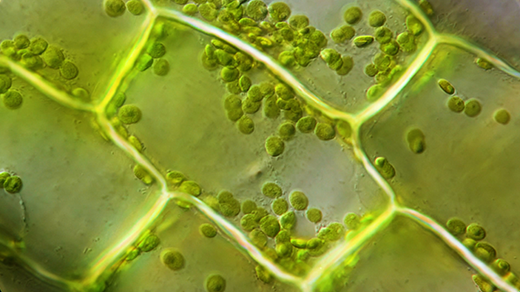
What You Need (Inside the Plant Cell)
- Photosynthetic pigments – chlorophyll a and b, carotenoids (e.g., β-carotene, lutein, zeaxanthin) to capture light.
- Photoreceptors – such as phytochrome, cryptochrome, and phototropin, to sense light quality and quantity.
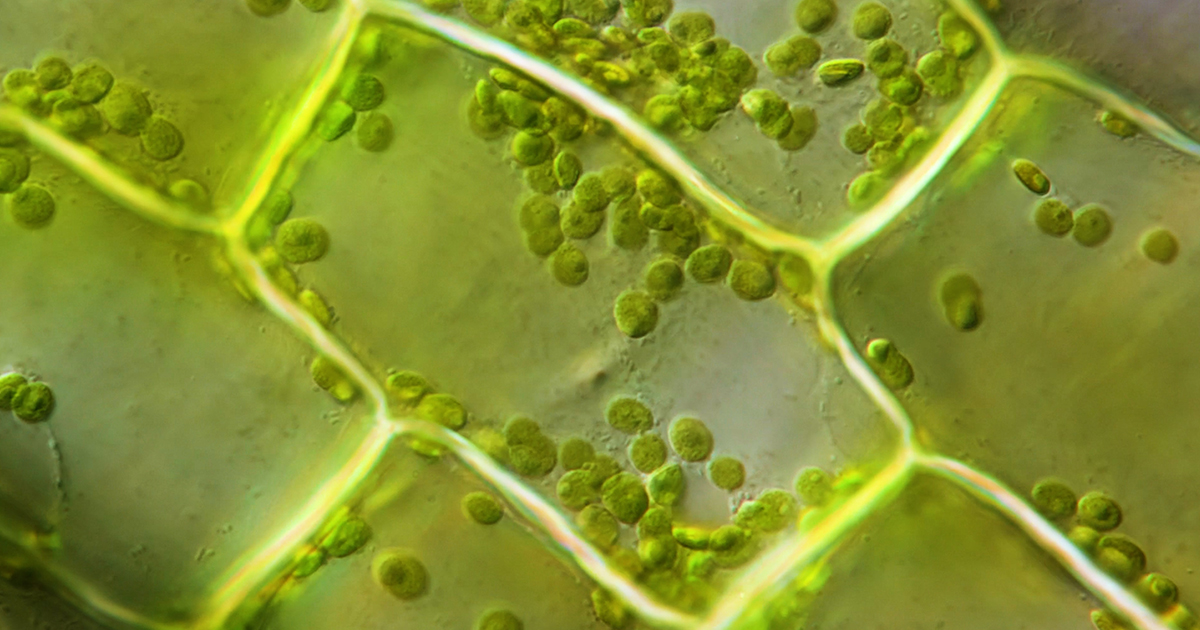
- Chloroplasts – the organelles housing the light reactions, including thylakoid membranes and the electron transport chain.
- Signaling molecules – calcium ions (Ca²⁺), reactive oxygen species (ROS), and plant hormones like abscisic acid (ABA).
- Enzymes and proteins – including those involved in the xanthophyll cycle, state transitions, and photoprotection (e.g., PsbS, VDE, ZE).
- Energy dissipation machinery – non-photochemical quenching (NPQ) mechanisms that safely release excess energy as heat.
Step-by-Step: The Mathematical Dance
Step 1: Sense the Light Landscape
Plants use multiple photoreceptors to continuously monitor light intensity, spectrum, and duration. For example, phototropins detect blue light and control growth movements, while cryptochromes sense blue/UV-A and help regulate daily rhythms. Phytochromes respond to red/far-red ratios, providing information about shade. These sensors send immediate signals to the chloroplasts and nucleus, setting the stage for rapid adjustments. Without this sensing, the plant cannot know when to ramp up or down its photosynthetic machinery.
Step 2: Trigger a Cellular Alarm – Calcium and ROS Burst
When light intensity suddenly spikes, chloroplasts release a wave of reactive oxygen species (ROS) like hydrogen peroxide. Simultaneously, calcium ions flood into the cytosol from internal stores. This dual signal is the plant’s alarm bell. Calcium activates calcium-dependent protein kinases (CDPKs) that modify key proteins, while ROS act as second messengers, turning on stress-responsive genes. The timing and amplitude of these bursts are mathematically related to the change in light – the plant uses a feedback loop to tune the response magnitude to avoid damage.
Step 3: Activate the Xanthophyll Cycle – The First Line of Defense
Within seconds, the xanthophyll cycle begins. Under high light, the enzyme violaxanthin de-epoxidase (VDE) converts violaxanthin into antheraxanthin and then zeaxanthin. This transformation alters the thylakoid membrane’s properties, allowing excess excitation energy to be safely dissipated as heat – a process known as non-photochemical quenching (NPQ). The amount of zeaxanthin produced is proportional to the light intensity (a mathematical relationship), ensuring that protection scales with danger. When light drops, the reverse enzyme zeaxanthin epoxidase (ZE) restores violaxanthin, turning off the heat sink.
Step 4: Adjust Light Harvesting – State Transitions
Photosystem II (PSII) and Photosystem I (PSI) must be balanced. Under excess light, a mobile light-harvesting complex (LHCII) moves from PSII to PSI, a process called state transition. This rebalancing reduces the excitation pressure on PSII and optimizes electron flow. The movement is regulated by the STN7 kinase, which is activated by the redox state of the plastoquinone pool – another mathematical feedback (the ratio of reduced to oxidized plastoquinone determines the kinase activity). Over minutes, this dance adjusts the antenna size.
Step 5: Tune Electron Transport and Protect Proteins
The electron transport chain (ETC) can become overloaded. Plants modulate the rate of electron transport through cyclic electron flow around PSI, which generates ATP without producing reducing power, and by regulating the activity of the cytochrome b6f complex. Additionally, photoprotective proteins like PsbS (a component of NPQ) undergo conformational changes that tighten energy dissipation. The plant also repairs damaged PSII reaction centers by replacing the D1 protein – a repair cycle that is constantly running and accelerated when damage rates rise. All these processes are interconnected in a network of differential equations that govern optimal operation.
Source: www.quantamagazine.org Step 6: Coordinate with Long-Term Responses – Gene Expression and Acclimation
If high light persists, the plant initiates long-term acclimation. Signals from the chloroplast (such as ROS, redox state, and metabolite levels) travel to the nucleus, where they change the expression of hundreds of genes. Plants produce more photoprotective pigments, increase the capacity of NPQ, alter leaf morphology (e.g., thicker cuticles), and adjust the composition of photosynthetic membranes. This reprogramming is a mathematical optimization: the plant invests resources to minimize damage while maximizing growth, balancing trade-offs encoded in genetic regulatory networks.
Step 7: Rapid Recovery and Dynamic Feedback
When light decreases, all these processes must reverse quickly. The xanthophyll cycle runs backward, zeaxanthin is converted back to violaxanthin, state transitions are reversed, and NPQ relaxes. The calcium and ROS signals decay, and the electron transport chain resumes normal operation. The entire system is a dynamical system with multiple timescales (seconds to hours), ensuring the plant can track the constantly changing light environment. Mathematical modeling shows that these feedback loops enable robust, stable responses despite noisy input.
Tips for Observing and Understanding the Dance
- Measure chlorophyll fluorescence – a non-invasive way to monitor NPQ and photosynthetic efficiency in real time. Look for the quenching patterns that reveal the mathematical adjustments.
- Use light fluctuations experiments – expose plants to step changes in light intensity and record the transient responses (e.g., via PAM fluorometry) to see the dynamic feedback in action.
- Study mutants – Arabidopsis lines lacking key players (like PsbS or VDE) highlight the importance of each step. Their failure to quench excess energy leads to photodamage.
- Connect to natural environments – Sunflecks in forests create rapid light jumps. Observe how understory plants have evolved enhanced kinetic responses (faster NPQ induction/relaxation) – a perfect real-world example of this mathematical dance.
- Model mathematically – For researchers, building ODE (ordinary differential equation) models of the xanthophyll cycle and NPQ can predict responses under various light scenarios, improving our understanding of crop resilience in changeable climates.
In summary, the hidden mathematical dance inside plant cells is a masterpiece of evolution: a network of sensors, signals, and feedback loops that transforms dangerous light fluctuations into a manageable resource. By following these steps, you can appreciate how plants orchestrate such complex choreography—and perhaps apply these principles to design more robust crops or artificial photosynthesis systems.
Related Articles
- Interlaced 4K on a CRT Monitor: The Feasibility and Setup
- Why Punisher: One Last Kill Stands Strong Amid Marvel's Multiverse Chaos
- Mastering the Anbernic RG Rotate: A Comprehensive Guide to Setup and Play
- 5 Steps to Uncover the Curator and the Next Dark Pictures Teaser in Directive 8020
- How to Infuse a Video Game Villain with Comedic Charm: Lessons from Matt Berry’s Bane in Lego Batman
- GameStop Eyes $100B Juggernaut Status with Bold eBay Acquisition Bid
- Disappearing Act: The Art of Invisible Smart Home Sensors
- How to Build a Single-Player RPG with Live Service Agility: Lessons from Pearl Abyss' Crimson Desert