A Comprehensive Guide to Starship V3’s First Orbital Launch: What to Expect and How It Works
Space exploration reaches a new milestone next week as SpaceX prepares to launch Starship V3—the tallest and most powerful rocket ever constructed. This guide provides a detailed walkthrough of the launch event, from preparation to execution, including technical insights, common pitfalls, and key takeaways for enthusiasts and professionals alike.
Overview
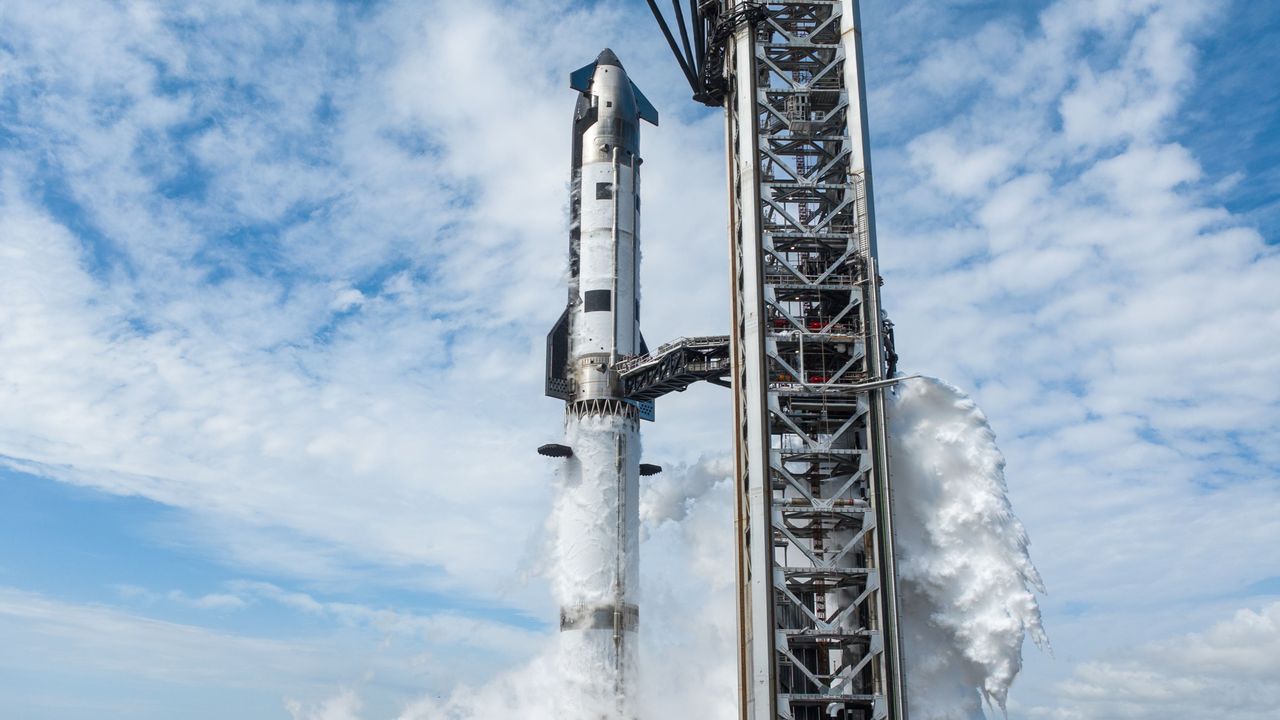
Starship V3 represents a generational leap in rocketry. Standing at over 120 meters tall, it surpasses Saturn V and SLS in height and thrust. Its payload capacity targets 100+ tonnes to low Earth orbit, enabled by 33 Raptor 3 engines on the Super Heavy booster and 6 vacuum-optimized Raptors on the upper stage. The upcoming flight is its first fully integrated orbital test, aiming to reach orbit, deploy a payload (simulated), and perform a controlled landing. This tutorial explains the sequence of events leading up to and during the launch, as well as the underlying systems.
Prerequisites
- Basic Knowledge of Rocketry: Familiarity with rocket stages, propulsion, and orbital mechanics.
- Access to Reliable Launch Information: Official SpaceX webcasts, NASA’s launch schedule, or dedicated spaceflight tracking services.
- Optional: Simulation Software: Tools like Kerbal Space Program or Orbiter can help visualize trajectories and staging.
- Weather Awareness: Launch windows are sensitive to weather at both the launch site (Boca Chica, Texas) and abort zones.
Step-by-Step Guide to the Starship V3 Launch
1. Pre-Flight Checklist & Countdown
SpaceX follows a rigorous countdown sequence, beginning T-12 hours. Key steps include:
- Vehicle Integration: The Starship upper stage is mated to the Super Heavy booster. All connections (propellant lines, electrical, data) are checked.
- Propellant Loading: Super cold liquid methane (for Raptor engines) and liquid oxygen are loaded. The exact mix ratio is tuned for maximum thrust.
- Engine Chill & Spin-Up: Helium spin-start motors are activated to bring turbopumps to speed before ignition.
- Final Systems Check: Flight computers run through health checks: steering actuators, avionics, telemetry, and range safety systems.
Code Example (simplified countdown pseudocode):
function countdown() {
  T-12h: load propellants
  loop (minutes) {
    if (all systems = green) continue;
    else hold launch;
  }
  at T-30s: arm flight termination
  at T-5s: ignite 33 Raptor engines
}
2. Liftoff & Ascent
At T=0, all 33 booster engines ignite, producing ~74 meganewtons of thrust. The vehicle lifts off from the orbital launch mount. Key phases:
- Max-Q: Approximately 50 seconds in, dynamic pressure peaks. Stiffness of steel hull (Starship uses 304L stainless steel) is critical.
- Staging: Around 2 minutes 45 seconds, the booster separates and flips for reentry. The upper stage continues with 6 engines.
Detailed look: The Raptor 3 engines on the booster burn for about 155 seconds, each producing 2.2 MN thrust. Throttle is reduced at staging.
3. Orbital Insertion & Payload Sim
After staging, Starship’s upper stage performs a series of burns to reach orbit. This flight aims for a ~250 km circular orbit. Approximately 10 minutes after launch, the second stage engines shut down (SECO). A dummy payload is released (a scaled replica of Starlink satellite or ballast).
4. Reentry, Descent & Landing
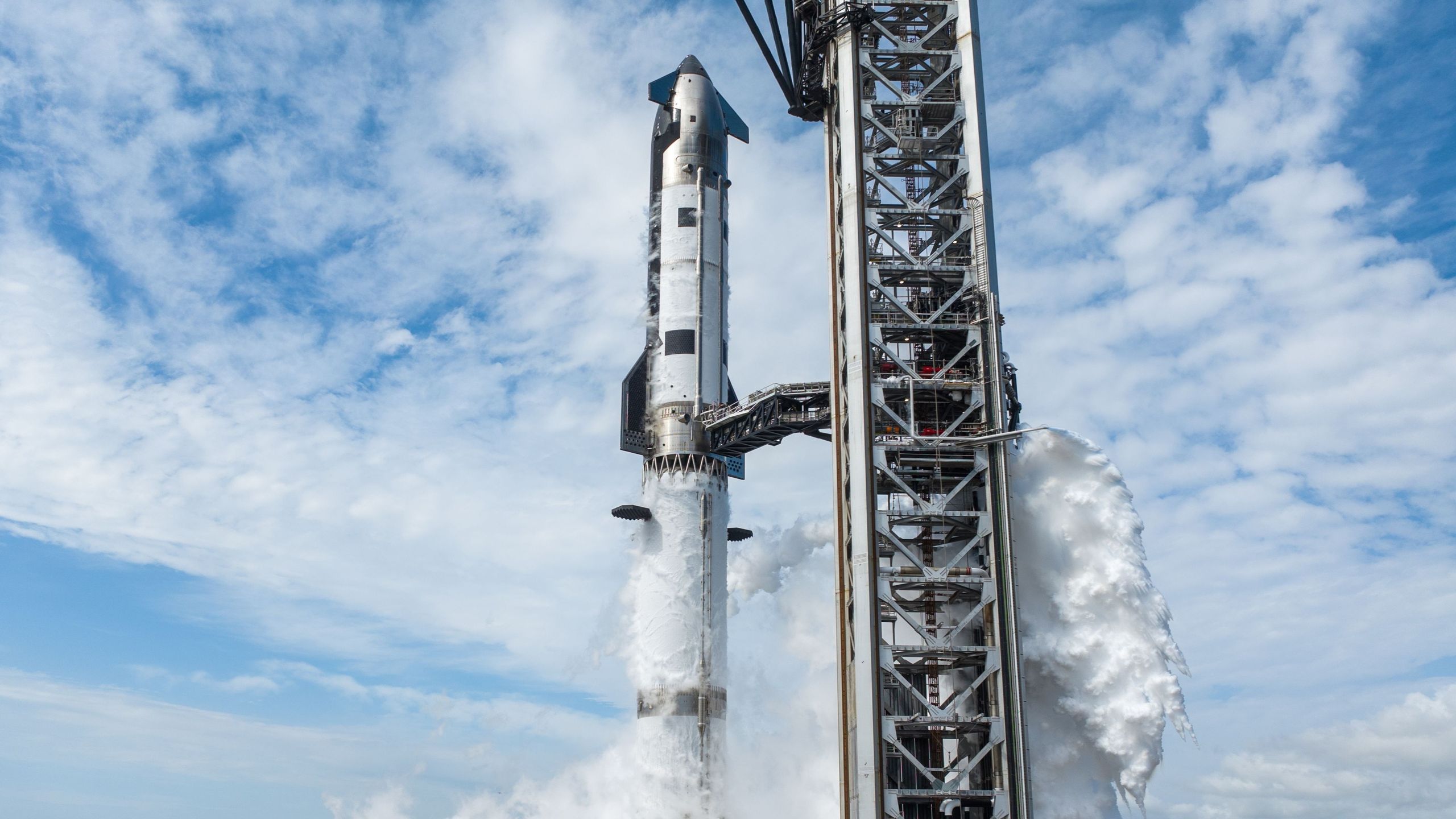
The most challenging part: Starship returns from orbit, surviving peak heating (~1400°C) using uncoated steel and tile shielding. It performs a belly-flop maneuver, then flips upright for a vertical landing. Super Heavy booster also lands on a drone ship or launch mount.
Sequence for Starship upper stage:
- Deorbit burn
- At ~70 km altitude, pitch up to increase drag
- Four flaps (two forward, two aft) control attitude
- Final flip before touchdown using three vacuum engines
Common Mistakes & Misconceptions
- Ignoring Raptor Engine Combustion Instability: Early versions had “chugging” issues. SpaceX solved this with new injector designs, but observers often misunderstand the noise.
- Overestimating Payload Capacity Premises: Starship V3’s announced 100+ tonnes to LEO is theoretical until validated. Misinterpretation of “fully reusable” vs. “expendable” numbers leads to confusion.
- Assuming Booster Recovery Is Trivial: Super Heavy’s landing legs were redesigned after static fire tests. The high g-forces and control require perfect timing.
- Neglecting Range Safety Considerations: Multiple abort zones and flight termination system activation are planned. A vehicle failure over land could cause debris; the FAA license includes strict constraints.
Summary
Starship V3’s maiden flight marks a pivotal moment in spaceflight. This guide has outlined the core phases: pre-flight preparation, liftoff, orbital insertion, and landing. The rocket’s unprecedented scale and complexity demand meticulous engineering. While challenges remain—especially regarding thermal protection and reusability—the mission sets the stage for future lunar and Mars missions. Observers should watch for real-time telemetry during the launch and note any deviations from the nominal plan. For more detailed updates, refer to our prerequisites section for recommended tracking resources.
Related Articles
- A Step-by-Step Guide to Exploring the Astronauts for America Podcast Episode
- The Power of Thought: How Giving AI Models More Time to Reason Improves Performance
- From Dream to Launch Console: Your Blueprint to Becoming a NASA Ground Systems Problem Solver
- How to Uncover the Financial Ties Between Tesla, SpaceX, and xAI in 2025
- How to Diagnose Failures in LLM Multi-Agent Systems with Automated Attribution
- Apple TV+’s 'For All Mankind' Finale Sets Stage for Stealth Sci-Fi Successor
- How Scientists Tracked Hidden Ocean Heat Approaching Antarctica’s Fragile Ice Shelves
- Understanding the Sinking of Mexico City: A Step-by-Step Guide