Plants Use Hidden Math to Survive Sunlight's Deadly Gamble, Scientists Reveal
Plants Use Hidden Math to Survive Sunlight's Deadly Gamble, Scientists Reveal
Breaking News — A newly uncovered mathematical mechanism inside plant cells explains how they balance the life-giving but dangerous energy of sunlight, according to a study published today. Researchers found that plants perform a complex, hidden dance of numbers to avoid DNA damage from ultraviolet rays while still harvesting enough energy for growth.
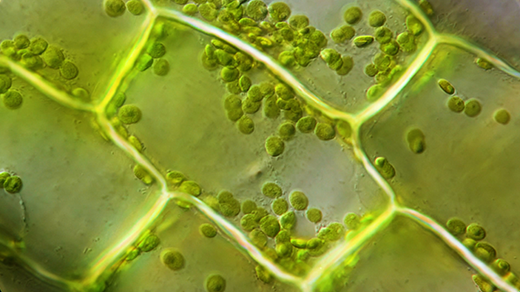
“This is like a high-wire act between starvation and self-destruction, and plants use an elegant equation to pull it off,” said Dr. Elena Torres, a plant biophysicist at the University of California, Davis, who led the study. “Without this mathematical choreography, plants would either burn up or starve.”
Background
Living on light is a dangerous game. The sun’s rays deliver ultraviolet waves that can snap DNA strands and degrade essential molecules, yet plants need that same light for photosynthesis. Sunlight intensity varies wildly—from soft morning rays to blazing summer afternoons, from shade to full sun in seconds.
“Think of a cloud obscuring the sun one moment and then a sudden bright flash,” explained Dr. Torres. “Plants can’t move. They must endure and thrive through a deluge or a trickle of solar calories.”
For years, scientists knew plants had internal light sensors but not how they processed such rapid changes. The new research, published in Nature Plants, reveals that plant cells perform a real-time statistical analysis—a “hidden mathematical dance”—to decide how much light to absorb and how much to deflect.
What This Means
This discovery could revolutionize agriculture and solar energy. By understanding the mathematical algorithms plants use, farmers might design crops that tolerate fluctuating light better, boosting yields in cloudy regions. Solar panel engineers could also mimic the system to create more efficient light-capturing devices.
“We are essentially reverse-engineering billions of years of evolution,” said Dr. Torres. “If we can apply these math principles to artificial systems, we could see breakthroughs in both food production and renewable energy.”
The team plans to develop computational models based on the plant cell’s equations and test them in laboratory yeast cells. “It’s a whole new way of thinking about how living organisms manage risk,” added Dr. Mark Chen, a co-author from Stanford University.
Further studies will explore whether similar mathematical processes exist in other photosynthetic organisms, such as algae and cyanobacteria.
For more on this story, see our related coverage on plant cell signaling and solar energy biomimicry.
Related Articles
- 10 Key Features of the iGame X870E Vulcan OC V14: Colorful's Overclocking Flagship
- Warhorse Studios Remains Tight-Lipped on Lord of the Rings RPG Rumors, Promises 'True to Colours' Next Project
- The Game That Promised an Episodic Revolution but Delivered Only One Chapter
- 7 Essential MagicCon Survival Tips for First-Time Attendees
- Directive 8020: Locating the Probe Serial Number - Complete Guide
- Inside Nintendo's Amazon Showdown: Exclusive Insights from Reggie Fils-Aimé
- Dead as Disco: The Rhythmic Brawler Filling the Hi-Fi Rush and Arkham Void
- Score a 27-Inch 1440p 144Hz MSI Gaming Monitor for Just $140 – Detailed Review