The Vera C. Rubin Observatory: Unlocking the Secrets of the Transient Universe
Deep in Chile's Atacama Desert, the Vera C. Rubin Observatory is gearing up to transform our view of the cosmos. With its massive survey camera and decade-long mission, it will capture the entire night sky every few days—revealing asteroids hurtling past Earth, stars that fizzle out, and even rare visitors from beyond our solar system. Dive into the questions below to learn how this groundbreaking facility will map the universe's most fleeting events.
What is the Vera C. Rubin Observatory and where is it located?
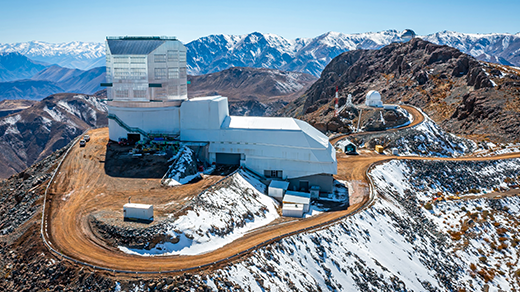
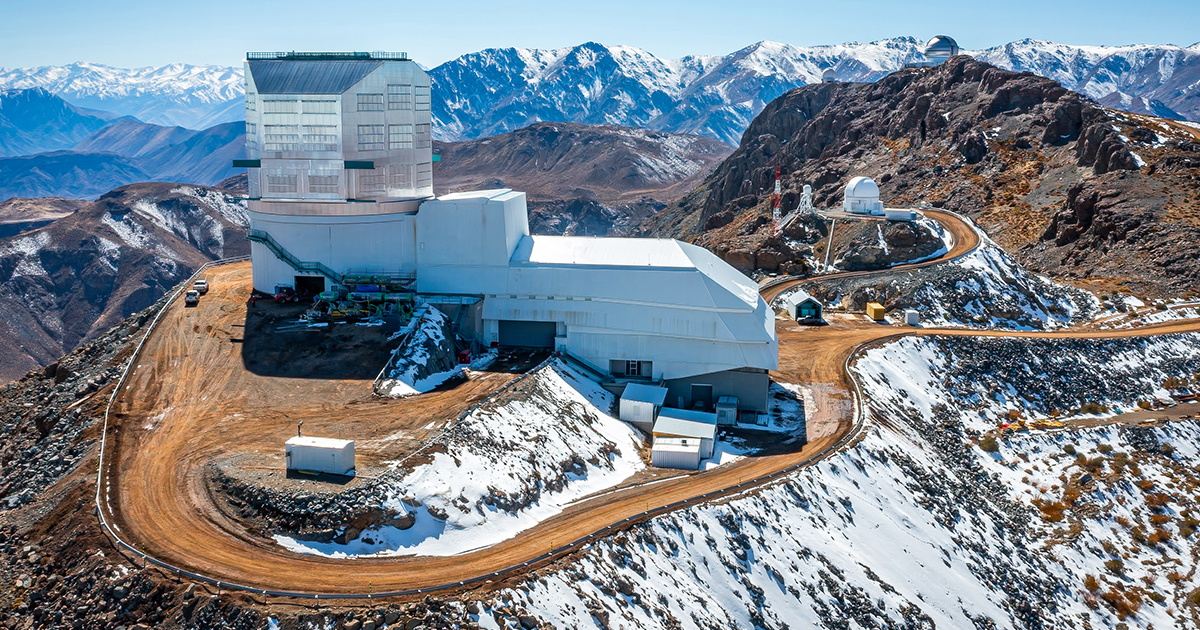
The Vera C. Rubin Observatory is a state-of-the-art astronomical facility perched atop Cerro Pachón in the Atacama Desert of northern Chile. This remote, high-altitude location offers exceptionally clear and dark skies, ideal for surveying the entire visible universe. The observatory is named after the pioneering astronomer Vera Rubin, who provided key evidence for dark matter. It houses the world's largest digital camera—a 3.2-billion-pixel behemoth—designed to capture wide-field images with stunning speed and sensitivity. Over a ten-year period, Rubin will repeatedly scan the sky, generating an unprecedented dataset that scientists will use to study everything from near-Earth asteroids to distant supernovas. Its primary instrument, the Simonyi Survey Telescope, and the LSST (Legacy Survey of Space and Time) camera work together to deliver a continuous movie of the cosmos, revealing objects and events that change or move.
What was the original name of the observatory and why was it changed?
Originally conceived in the mid-1990s, the project was called the Dark Matter Telescope, reflecting its primary goal of probing the mysterious substance that makes up most of the universe's mass. However, as the design evolved and scientific objectives broadened, the name shifted to better represent the facility's full potential. It became the Large Synoptic Survey Telescope (LSST), emphasizing its ability to repeatedly survey vast areas of sky—the "synoptic" view. In 2019, the observatory was officially renamed the Vera C. Rubin Observatory in honor of the astronomer whose work on galactic rotation curves provided the first direct evidence for dark matter. This tribute not only celebrates Rubin's legacy but also highlights the observatory's central mission: to understand the nature of dark matter and dark energy while simultaneously discovering moving and transient objects like asteroids, comets, and even interstellar visitors.
How will Rubin observe the sky and over what time period?
Rubin will execute a revolutionary survey called the Legacy Survey of Space and Time (LSST). Using its 8.4-meter mirror and the world's largest digital camera, the telescope will capture a 9.6-square-degree field of view—about 40 times the area of the full Moon—in each exposure. It will image the entire visible sky from its Chilean site every three to four nights for a decade. That means each patch of sky will be observed roughly 1,000 times over ten years, creating a time-lapse movie of the universe. This cadence allows Rubin to detect and track objects that move (asteroids, comets), change brightness (variable stars, supernovas), or appear only briefly (explosions, flaring events). The resulting data stream—about 20 terabytes per night—will be processed in real time and made publicly available, enabling astronomers worldwide to trigger follow-up observations on fleeting events.
What types of astronomical objects will Rubin study?
Rubin is a cosmic detective with a broad remit. It will track skyscraper-sized asteroids that come close to Earth, helping us assess potential impact hazards. It will catch supernovas—including rare "failed" ones where a massive star collapses directly into a black hole without a bright explosion. The survey will also spot interstellar visitors like 'Oumuamua or Borisov, comets and asteroids from other star systems that pass through our solar system. Beyond our neighborhood, Rubin will map the distribution of galaxies, measure the faint distortion of light by dark matter (weak gravitational lensing), and discover millions of new variable stars and quasars. It will even find Kuiper Belt objects at the edge of the solar system and potentially detect the elusive Planet Nine if it exists. Essentially, anything that moves or changes in the night sky falls under Rubin's watchful eye.
How will Rubin help in understanding dark matter?
Dark matter doesn't emit, absorb, or reflect light, so it must be studied through its gravitational effects. Rubin will map the distribution of dark matter in two primary ways. First, by observing the shapes of billions of distant galaxies, astronomers can measure how their light has been slightly gravitationally lensed by intervening dark matter—similar to looking through a warped lens. These subtle distortions reveal the dark matter's mass and location. Second, Rubin will track the motions of stars and galaxies to infer the gravitational pull of unseen dark matter, thereby constraining its properties. The observatory's wide, deep, and repeat imaging is uniquely suited for this because it collects enough data to measure extremely faint lensing signals across the entire sky. Combined with its detection of galaxy clusters and supernovae, Rubin will refine models of dark matter and dark energy, potentially reshaping our understanding of the universe's composition and evolution.
What makes Rubin's survey unique compared to previous telescopes?
Several features set Rubin apart. Unprecedented survey speed—its giant camera captures a 3.5-degree-wide field, allowing it to cover the whole southern sky every few nights, something no previous telescope could do. The depth and cadence are extraordinary: it reaches magnitude 27.5 (about 10 million times fainter than the naked eye) and revisits each spot hundreds of times, creating a time-domain movie. No other facility combines such a wide field with such rapid repeat coverage. The data volume (petabytes per year) and its public availability also break new ground—astronomers anywhere can dive into the LSST catalog and discover moving or variable objects. Additionally, Rubin's real-time alert system will send out notifications of changes within 60 seconds of detection, enabling instant follow-up by other telescopes. This combination of speed, depth, and openness makes Rubin a game-changer for transient astronomy and surveys of the dynamic sky.
Related Articles
- Mars Gravity Assist: A Step-by-Step Guide to NASA's Psyche Spacecraft Flyby on May 15
- Physicists Crack 40-Year Mystery of Universal Growth in Two Dimensions
- Unveiling the Cosmic Dust: How AtLAST Telescope Will Explore the Universe's Hidden Side
- Orbital Pharma and Nuclear Thrust: The New Space Age Frontiers
- Catch the Strawberry Moon: Your Complete Guide to June 2026's Full Moon
- Uncovering Ancient Dentistry: A Step-by-Step Guide to Analyzing a 60,000-Year-Old Neanderthal Drilled Tooth
- A 130-Kilometer Dam Across the Bering Strait: The Radical Plan to Prevent AMOC Collapse
- The Science Behind Ghostly Encounters: How Infrasound and Environmental Factors Shape Paranormal Experiences