Modern Twist on Vintage Punch Cards: 3D Printing and Computer Vision
Introduction
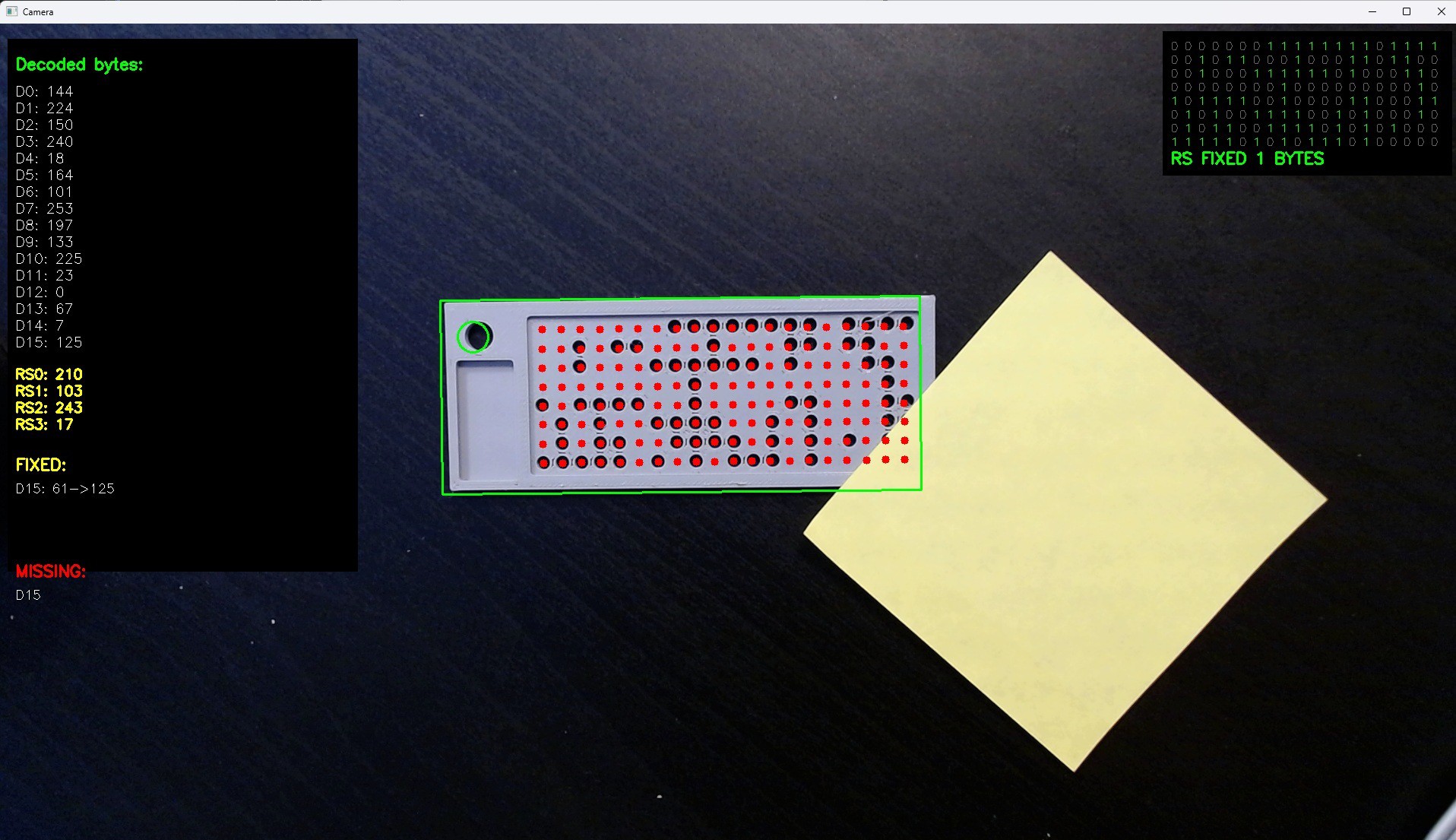
Punch cards might be one of the most archaic forms of data storage, but they offer remarkable durability and simplicity. A recent project by [Bitroller] breathes new life into this retro medium by combining 3D printing with computer vision. Instead of traditional paper cards, these are made of PLA plastic—or even stainless steel for fireproof longevity—and read using a webcam and OpenCV. While storing a mere 16 bytes might seem laughable by today's standards, the approach is a clever blend of old and new tech that appeals to hackers and history buffs alike.
Designing the 3D Printed Punch Cards
At the heart of the project is a Python script that generates printable files for the punch cards. Each card encodes 16 bytes of user data—enough for a password or a cryptographic key—plus 4 bytes of error correction using the Reed-Solomon algorithm. The choice of material is crucial: [Bitroller] notes that if stainless steel were used instead of PLA, the cards would survive a five-alarm fire and outlast every other possession. The cards are designed with holes that are physically printed (not punched), leading to an interesting debate about terminology.
Reed-Solomon Error Correction
The error-correction bytes allow the recovery of up to two corrupted bytes during reading. This redundancy is particularly valuable for a physical medium that might get scratched, bent, or partially obscured. The Reed-Solomon algorithm is the same technology used in QR codes and DVDs, proving that even a low-density format can benefit from robust error recovery.
Reading with OpenCV
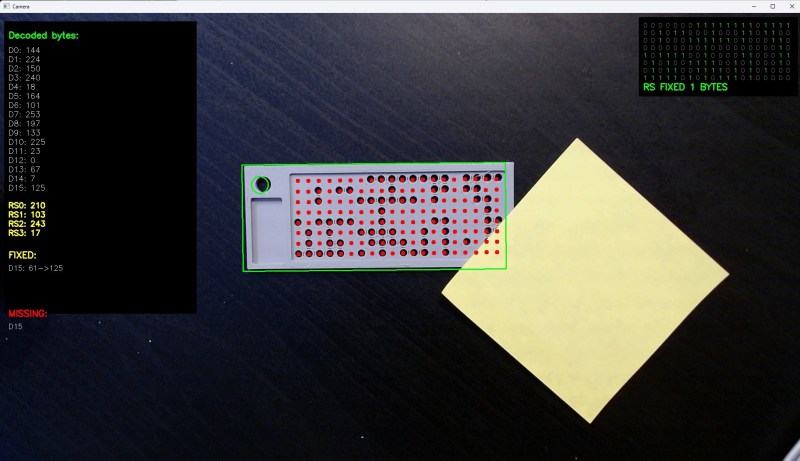
The reading process is where the project truly shines. Another Python script uses OpenCV to capture an image of the entire card from a webcam, relying on the contrast between a black table and the light-colored PLA material. The card is detected and decoded in one snapshot—a massive overkill compared to the mechanical readers of the 1960s, which would have required a supercomputer to process such an image. Today, a simple webcam and a laptop handle it effortlessly.
Key steps in the reading pipeline:
- Place the card on a dark, matte surface.
- Capture a real-time frame from a webcam positioned above.
- Apply thresholding and contour detection to isolate the card.
- Extract the hole pattern and decode the bits.
- Verify and correct errors using Reed-Solomon.
The entire process takes less than a second, making it practical for quick archival or verification.
The Philosophical Question: Is It a Punch Card?
One nagging issue remains: If the holes are created by additive manufacturing (3D printing) rather than being punched out, can we still call it a "punch card"? Traditional punch cards were made by mechanically removing material—holes, chads, and all. [Bitroller]'s cards are printed with voids in place, so nothing is physically punched. Semantic hairsplitting aside, the functionality is identical: a pattern of holes that represent binary data. The term "punch card" has evolved to describe any card with a hole-based encoding, regardless of manufacturing method.
Relevance Today
You might think punch cards are completely obsolete, and you'd be mostly right—but that doesn't stop enthusiasts from experimenting. This project proves that even a low-density, physical storage medium can be revived with modern technology. Historically, punch cards were used in everything from Jacquard looms (weaving patterns) to early MIDI sequencers. The idea of storing a private key on a piece of plastic might sound silly, but it offers offline, air-gapped security that no cloud service can match.
If you're looking for a fun weekend hack that combines coding, 3D printing, and computer vision, this project is a perfect entry point. Who knows—your 16-byte password might survive the apocalypse etched in melted plastic.
Conclusion
[Bitroller]'s punch card project is a delightful anachronism: a low-tech storage medium reimagined with high-tech tools. It's not practical for everyday use, but it's a testament to the hacker spirit of innovation. Whether you call them punch cards or printed hole cards, they offer a unique blend of durability, simplicity, and nostalgia.
Related Articles
- Critical Command Injection Flaw in TP-Link Routers Actively Exploited by Mirai Botnet
- Claude Mythos and the New Frontier of AI-Powered Cybersecurity: Key Questions Answered
- How to Fortify Your NGINX Against the Hidden 18-Year-Old Flaw (DoS & RCE Risks)
- New DNA Analysis Reveals Four More Identities from Franklin's Doomed Arctic Expedition
- Canonical Services Under Sustained Cyberattack: Snap Store, Ubuntu Website, and Launchpad Affected
- Anatomy of a Botnet: How a DDoS Protection Firm Became a Source of Attacks
- Google Shifts Bug Bounty Focus: Chrome Rewards Trimmed, Android Bounties Soar as AI Drives New Security Challenges
- New Cyber Espionage Campaign: Silver Fox Group Deploys 'ABCDoor' Backdoor via Tax Phishing Emails in Russia and India