The $573 Million Web: 10 Key Revelations from Tesla’s Latest Filing About Elon Musk’s Companies
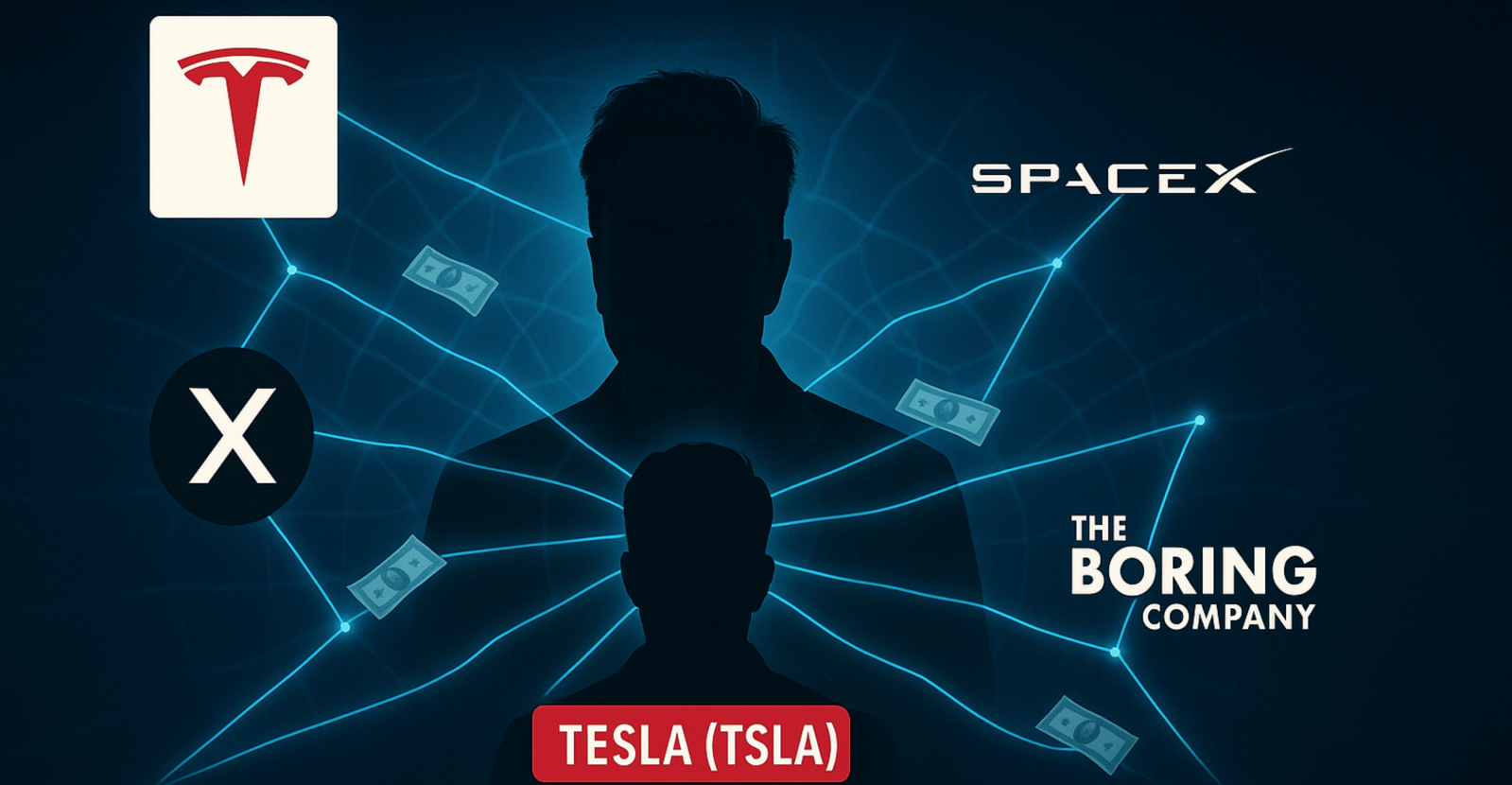
When Tesla filed its amended annual report (Form 10-K/A) with the SEC on April 30, it dropped a bombshell: Elon Musk’s corporate empire is intertwined through a staggering $573 million in transactions. From SpaceX and xAI to X, The Boring Company, and even Musk’s personal security firm, the document lays bare for the first time the true scale of intercompany dealings. This listicle breaks down the top 10 things you need to know about this financial web—each item revealing how Tesla, as a public company, interacts with Musk’s private ventures.
1. SpaceX and xAI Account for Over Half a Billion in Revenue
The largest chunk of the $573 million comes from revenue Tesla receives from SpaceX and xAI. According to the filing, Tesla earned a combined $573 million from these two entities in the most recent fiscal year. This includes payments for services, product purchases, and licensing fees. The sheer size highlights how deeply Musk’s aerospace and AI companies rely on Tesla’s resources—whether it’s battery supplies, engineering support, or cloud computing. Critics worry this creates a maze of related-party transactions that could obscure Tesla’s true standalone performance.
2. Millions Flow to X (Formerly Twitter) for Advertising and Services
Tesla also reported significant expenses routed to X, the social media platform Musk acquired in 2022. The filing reveals tens of millions in payments for advertising, data access, and software subscriptions. Since Musk took X private, these intercompany deals ensure that Tesla’s marketing budget stays within the Musk ecosystem. While Tesla claims these are at arm’s-length prices, some shareholders question whether the rates favor X over Tesla’s shareholders.
3. The Boring Company Receives Payments for Tunnel and Infrastructure Work
The Boring Company—Musk’s tunneling startup—is another beneficiary. Tesla paid millions for use of tunnels, construction consulting, and testing of underground transport systems. In particular, the Las Vegas Convention Center Loop, run by The Boring Company, uses Tesla vehicles, leading to a circular flow of cash: Tesla sells cars to the Boring Company, then pays the Boring Company for tunnel access. This circularity complicates financial analysis and raises eyebrows among regulatory watchdogs.
4. Musk’s Personal Security Firm Gets a Cut
Perhaps the most controversial line item is the millions Tesla paid to a security firm that exclusively protects Elon Musk. The filing confirms that Tesla reimburses this firm for costs linked to protecting Musk during company business. While CEO security is common, the lack of competitive bidding and the personal nature of the expense have sparked debate. Some argue that Tesla shareholders are effectively subsidizing Musk’s private security.
5. The Transactions Cover a Broad Range of Goods and Services
Beyond revenue and expense categories, the filing details the types of transactions: purchase of batteries and powertrains from Tesla by SpaceX, licensing of Tesla’s automated driving software to xAI, lease of office space to X, and even joint development of semiconductors. This breadth means almost every Musk company has at least one contractual tie to Tesla, creating an intricate net that auditors must carefully unwind each quarter.
6. The 10-K/A Filing Offers Unprecedented Transparency
Tesla’s amendment to its annual report is significant because it goes beyond standard related-party disclosures. Traditionally, companies lump such transactions into a single line. Here, Tesla itemized $573 million in revenues and millions more in expenses, breaking down counterparties and nature of business. This level of detail came after informal SEC inquiries and pressure from institutional investors demanding clarity on conflicts of interest.
7. Historical Trends Show Rapid Growth in Intercompany Deals
Comparing this filing to prior years reveals that the web of transactions is growing. In 2022, the combined revenue from SpaceX and xAI was about $200 million; it has nearly tripled. X expenses didn’t exist before the acquisition. This trend suggests that as Musk’s private empire expands, so does its integration with Tesla—raising questions about whether Tesla is becoming a cash cow for Musk’s other ventures.
8. Potential Conflicts of Interest Loom Large
With Musk as CEO of Tesla and also CEO/owner of SpaceX, xAI, X, and The Boring Company, every transaction carries an inherent conflict. The SEC filing acknowledges these deals are approved by Tesla’s audit committee, but committee members are not fully independent (one is a Musk friend). Critics say this undermines arm’s-length pricing assurances. The $573 million disclosure is a stark reminder of how Musk’s multiple hats can blur corporate boundaries.
9. Impact on Tesla Shareholders: Risks and Rewards
For investors, the web of transactions cuts both ways. On one hand, Tesla benefits from selling products to high-growth private firms. On the other, it exposes shareholders to risks: if a Musk private company fails, Tesla could lose outstanding receivables or supply chain dependencies. Moreover, the lack of independent oversight could lead to deals that favor Musk’s personal wealth over shareholder value. The filing has already prompted several shareholder lawsuits.
10. Future Disclosures May Become More Frequent
The April 30 filing may be just the beginning. The SEC is reportedly examining whether Tesla should file similar updates every quarter instead of annually. Market analysts predict that as Musk’s companies continue to multiply (e.g., Neuralink), the volume of intercompany deals will only increase. Tesla’s own guidance hints at further disclosure enhancements, suggesting that the $573 million figure is a floor, not a ceiling, in the evolving Musk ecosystem.
Understanding the $573 million web is essential for anyone following Tesla or Elon Musk. It shows that Tesla is not just a car company—it’s the financial hub of an empire. While Musk argues these deals create synergies, shareholders and regulators are paying closer attention than ever. Whether this transparency leads to reform or simply confirms suspicions, one thing is clear: the ties between Musk’s companies are stronger and more complex than most imagined.
Related Articles
- Janet Petro, NASA's Kennedy Space Center Director, Announces Retirement
- Your Ultimate Guide to Catching the Eta Aquariid Meteor Shower: From Halley's Comet Debris to Shooting Stars
- Streaming the Moon: Capcom's PRAGMATA Lands on GeForce NOW Day One
- Samsung Kicks Off One UI 9 Beta Program for Galaxy S26 Series: Key Improvements and Availability
- Decoding the Glycerol-TNAP Switch: How Cold Exposure Unlocks Brown Fat's Alternative Heat-Producing Pathway
- 10 Fascinating Facts About Curiosity Rover's Rock Removal Battle
- Global Airport Emissions: How Just Three Hubs Outpace an Entire City's Carbon Footprint
- 7 Reasons Why Spain’s Push for Synthetic Sustainable Aviation Fuel Matters Now More Than Ever