Bronze Age Burials Reveal a World of Innovation and Tradition in Central Europe
Introduction
For centuries, the Bronze Age in Central Europe has been understood largely through scattered artifacts and fragmentary evidence. But a recent study of exceptionally rare, untouched burials—untouched by the cremation practices that dominated the period—has opened a remarkable window into the daily lives, diets, and social networks of these ancient communities. These graves, hidden for over 3,000 years, tell a story of experimentation and connection, yet also a deep-rooted attachment to local homelands.
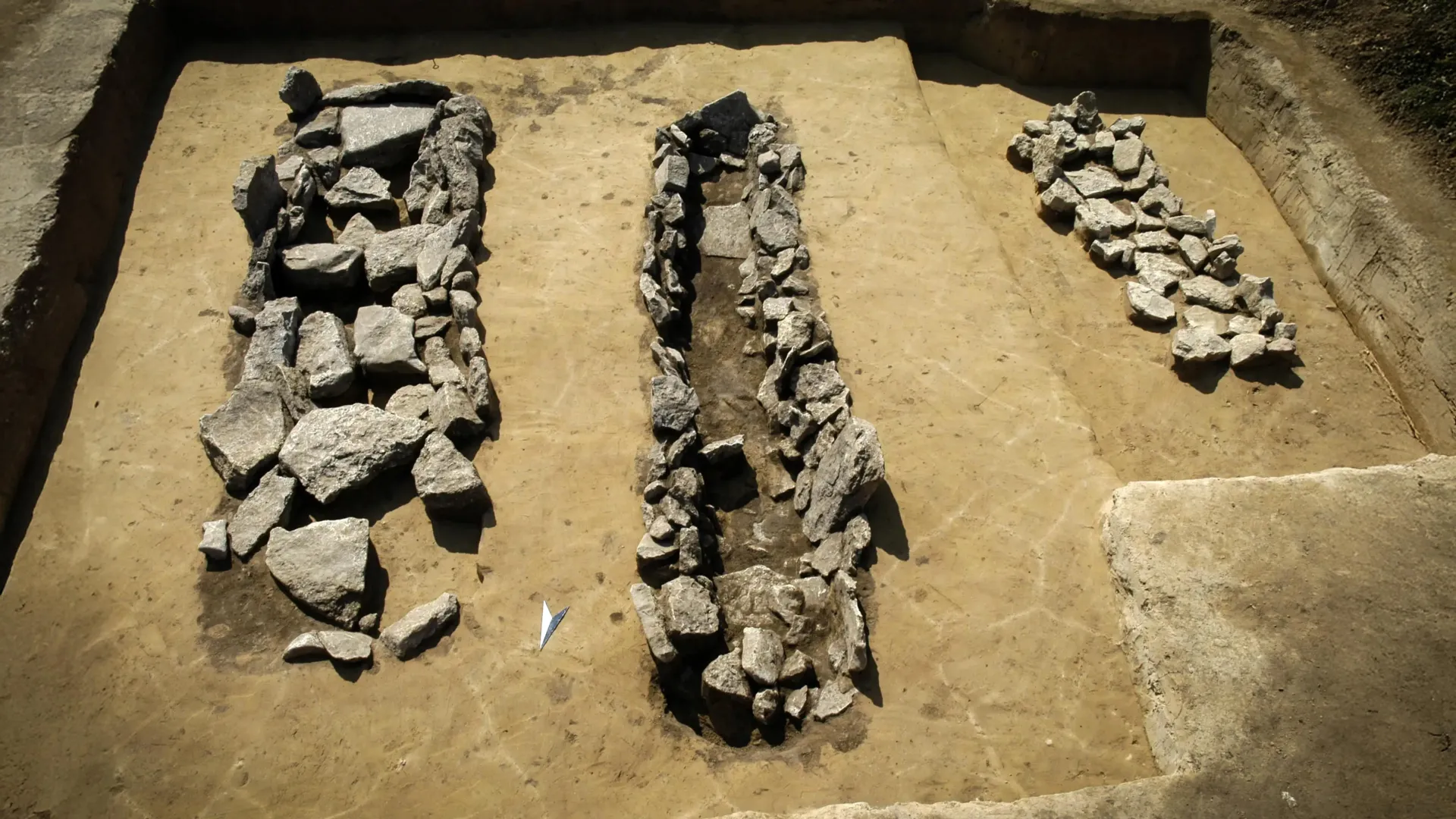
What the Burials Reveal
The graves, discovered in a region spanning modern-day Germany, Poland, and the Czech Republic, belong to the Bronze Age (c. 2200–800 BCE), a time when cremation was the standard funerary practice across much of Europe. The fact that these bodies were instead inhumed—buried intact—is itself extraordinary. This preservation has allowed scientists to analyze skeletal remains and grave goods in unprecedented detail.
Dietary Innovations
Analysis of bone chemistry and dental plaque from these individuals reveals that Bronze Age communities were actively experimenting with new foods. Isotopic signatures indicate a shift in diet over several generations, incorporating more millet, a drought-resistant grain that had recently arrived from Asia, alongside traditional staples like barley and wheat. Animal bones found in the graves also suggest the consumption of goats and sheep, possibly for milk and cheese, as well as a surprising presence of fish from distant rivers—hinting at long-distance trade or seasonal mobility.
Burial Rituals and Cultural Exchange
Unlike the standardized cremation practices that would later dominate, these burials display a rich diversity of ritual. Some individuals were interred with intricately designed bronze jewelry—such as spiral arm rings and neck collars—that share stylistic motifs with artifacts found in Scandinavia and the Carpathian Basin. This suggests that even as communities maintained distinct local traditions, they were part of a wider network of cultural exchange. One grave contained the remains of a woman adorned with amber beads, likely from the Baltic coast, alongside a copper dagger of Central European origin—evidence of personal connections that spanned hundreds of kilometers.
Rooted in Homelands
Despite these external influences, DNA analysis and strontium isotope studies show that most individuals buried in these graves had lived their entire lives within a few dozen kilometers of the burial site. This contradicts earlier theories that Bronze Age populations were highly mobile or migratory. Instead, these communities appear to have been deeply rooted, forming stable local societies that selectively adopted new ideas and goods without abandoning their ancestral lands.
Social Structure and Identity
The variety in grave goods also hints at emerging social hierarchies. Some burials are rich in bronze objects and pottery, while others contain only simple personal items. One particularly striking grave—dubbed the “Warrior’s Rest”—held a man in his thirties with a bronze sword, a spearhead, and a boar’s tusk helmet. Such finds suggest that social status was increasingly tied to martial prowess and access to exotic materials. Yet, there is no evidence of centralized power; rather, a patchwork of small, autonomous communities that maintained their own identities while participating in shared cultural practices.
Broader Implications for Bronze Age Europe
These findings challenge long-held narratives about the Bronze Age as a period of massive population movements. Instead, the picture that emerges is one of localized innovation and selective integration. The untold story of these rare inhumation graves shows a world where people embraced new crops, materials, and rituals—but did so from the comfort of enduring home territories. It is a lost world that, after 3,000 years, is finally being pieced together, one burial at a time.
The Bronze Age in Central Europe
The Bronze Age in this region is characterized by the widespread use of bronze tools and weapons, the rise of fortified settlements, and the development of far-reaching trade networks. The period saw the transition from simple farming to more complex societies, with evidence of craft specialization, long-distance exchange of raw materials, and the emergence of new religious and funerary practices.
Conclusion
The rare burials of Central Europe are more than just archaeological curiosities—they are time capsules that preserve the intimate details of a transformative era. By combining cutting-edge scientific analysis with careful excavation, researchers are rewriting the story of the Bronze Age: not as a chaotic age of migration, but as a vibrant tapestry of local traditions and global connections, woven together over three millennia.
Related Articles
- Early Embryo Vulnerability to COVID-19: New Insights from UC Riverside
- How to Identify the Hidden Risk Factors in SpaceX's IPO: A Step-by-Step Analysis
- Unraveling the Mystery of Stellar Eruptions: What Are Supernova Impostors?
- How to Uncover the Hidden Wiper Flaw in VECT Ransomware
- Empower AI Agents with Secure Desktop Access Using Amazon WorkSpaces: A Step-by-Step Guide
- Understanding Quantum-Safe Ransomware: A Step-by-Step Guide to Kyber and ML-KEM
- Coffee's Hidden Power: Gut Health and Brain Function Transformed, New Study Reveals
- Three Tech Trends Reshaping Our Future: IVF Innovation, Balcony Solar, and AI Resistance