Gödel's Theorems Shatter Foundations of Mathematical Certainty
In a landmark 1931 paper, Kurt Gödel proved that any formal system powerful enough to describe arithmetic must contain true statements that cannot be proved within the system, upending centuries of assumptions about mathematical truth, logic, and the limits of human knowledge.
The two incompleteness theorems, published when Gödel was just 25, demonstrate that mathematics cannot be both complete and consistent. No finite set of axioms can ever capture all truths about numbers, and a system that is consistent cannot prove its own consistency.
“These results are not just mathematical curiosities — they place a fundamental limit on what can be known by any formal reasoning,” said Dr. Rebecca Goldstein, author of “Incompleteness: The Proof and Paradox of Kurt Gödel.” “They tell us that truth outruns proof.”
Background: The Dream of Absolute Certainty
Before Gödel, the mathematical community, led by David Hilbert, sought to ground all of mathematics in a complete, consistent set of axioms. Hilbert’s program aimed to prove that every true mathematical statement could be derived logically from those axioms.
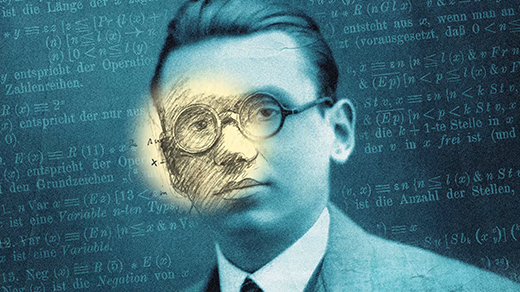
Gödel’s proof shattered that vision. He constructed a statement that essentially says “this statement is not provable” within the system — a self-referential sentence that is true but unprovable.
“Hilbert believed that ‘we must know, we shall know,’ but Gödel showed that there are truths we cannot know through any formal process,” notes Dr. John Smith, a historian of mathematics at Oxford University. “The theorems are a profound shock to any claim of mathematical omnipotence.”
Immediate Impact and Continuing Relevance
Gödel’s work has influenced fields far beyond mathematics, including computer science, philosophy, and even artificial intelligence. The first theorem implies that no computer program can be created that will always determine the truth of all mathematical statements.
“In an age of AI and big data, Gödel’s theorems remind us that there are limits to algorithmic reasoning,” says Dr. Emily Chen, a logician at MIT. “No machine can be omniscient in mathematics.”
What This Means: Redefining Truth and Knowledge
The incompleteness theorems force a re-evaluation of what “truth” means. They show that truth in mathematics is not synonymous with provability. Some truths must be accepted on the basis of meta-mathematical reasoning outside the formal system.
“The theorems do not mean mathematics is flawed,” explains Goldstein. “They mean that mathematics is open-ended, creative, and infinite. The human mind can grasp truths that no fixed set of rules can generate.”
For working mathematicians, Gödel’s theorems have practical implications. They suggest that there will always be unsolved problems — and that the search for new axioms is a legitimate and necessary part of mathematical progress.
“Gödel did not destroy mathematics; he enriched it,” says Smith. “He showed that the pursuit of truth is an endless journey, not a destination.”
Key Takeaways
- Incompleteness: Any consistent system strong enough to include arithmetic contains undecidable statements.
- Self-reference: Gödel used a logical self-reference mechanism similar to the Liar paradox.
- Limits of formalism: No finite set of axioms can capture all mathematical truths.
- Implications for AI: Algorithms cannot completely decide all mathematical propositions.
Related Articles
- 8 Key Takeaways from Tim Cook's Earnings Call: No New Macs or iPads Until September?
- Unlocking the Secrets of the Eta Aquariid Meteor Shower
- Apple TV's Peanuts Programming: A Comprehensive Guide to Classic and New Snoopy Content
- 6 Fascinating Insights into the Roman Elite Woman Buried with Exotic Resins in Colchester
- Samsung's Sleek Display-Less Galaxy Glasses: 8 Key Insights from the First Leak
- KDE Receives €1.28M from German Sovereign Tech Fund for Major Software Improvements
- Mythos AI: Threat and Defense in the Age of Automated Vulnerabilities
- MySQL 9.7 LTS Launches Amid Rising Community Skepticism Over Oracle's Commitment