From Blowtorch to Die Shot: Unconventional Delidding of an Intel Xeon Processor
Delidding a processor is usually a precise operation involving specialized tools, but one tech enthusiast known as 'The Hackinator' took a completely different approach. By using a blowtorch and a hunting knife on a wood chopping block, he successfully removed the integrated heat spreader (IHS) from an Intel Xeon Silver 4110—all to capture a high-resolution die shot. This Q&A explores the unconventional method, the risks involved, and what you can learn from the experiment.
What is delidding, and why do people do it?
Delidding involves removing the metal heat spreader (IHS) from a processor to expose the silicon die underneath. Enthusiasts typically do this to replace the stock thermal interface material (TIM) with a higher-performance compound, which can lower temperatures and allow for better overclocking. In extreme cases, like this one, the goal is to photograph the die itself—often for educational or artistic purposes. The Intel Xeon Silver 4110 is a server-grade chip, but delidding it with violent tools serves no practical cooling benefit. Instead, it showcases the internal structure in a dramatic way.
Why would someone use a blowtorch and a hunting knife to delid a Xeon?
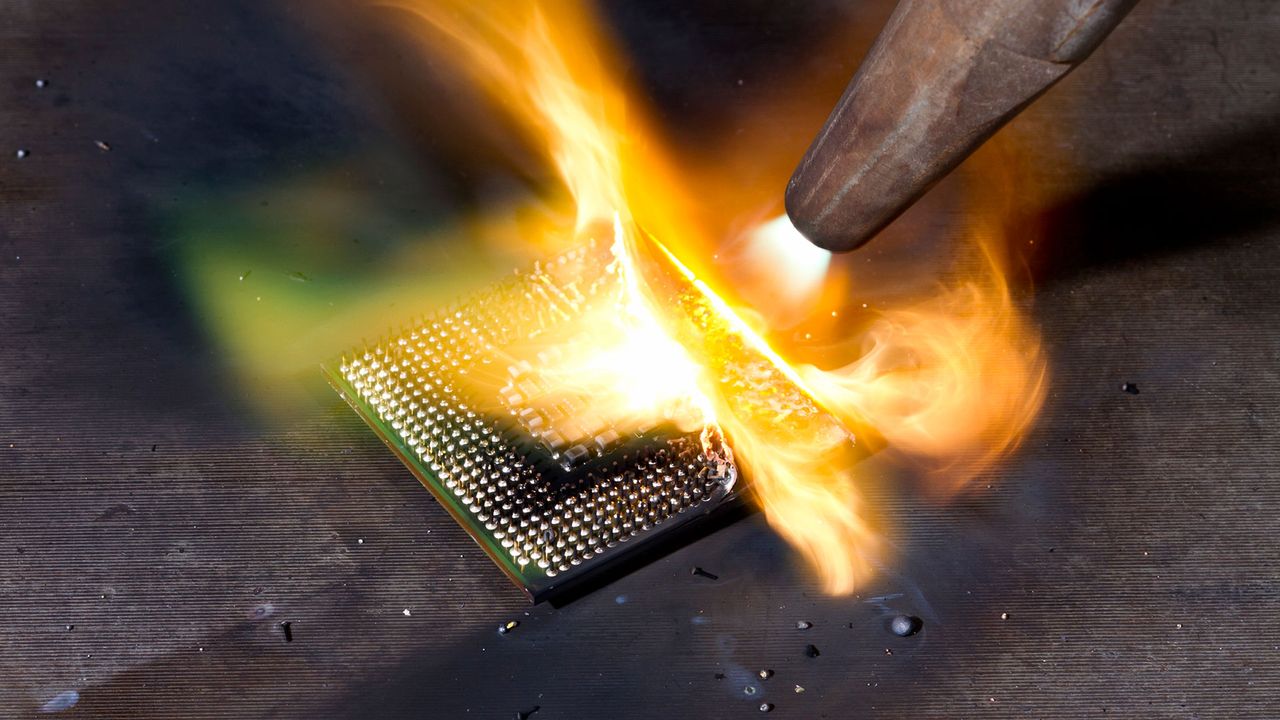
Standard delidding tools are designed to apply even pressure without damaging the delicate PCB or die. The Hackinator chose a blowtorch and hunting knife because he lacked those tools but wanted to demonstrate that creativity can overcome resource limits. The blowtorch melts the adhesive holding the IHS, making removal easier, while the knife acts as a lever. The wood chopping block provides a stable, forgiving surface—safer than metal or hard plastic. It’s a crude but effective method, though it comes with high risk of cracking the silicon or bending pins.
What tools are needed for this unconventional delidding technique?
To replicate this process, you would need: a propane blowtorch (for heating the IHS), a hunting knife with a sturdy blade (to pry the IHS off), a wood chopping block (as a work surface), and heat-resistant gloves for safety. Optional but helpful: a multimeter to verify no electrical shorts after the operation, and magnifying tools to inspect the die. The entire setup is deliberately low-tech, relying on brute force and heat rather than precision machines. The Hackinator’s video shows he also used a plastic spudger later to gently clean residual adhesive from the die.
What is the Intel Xeon Silver 4110, and why did the Hackinator choose it?
The Intel Xeon Silver 4110 is an 8-core, 16-thread processor from the Skylake-SP family, launched in 2017 for servers and workstations. It features a base clock of 2.1 GHz, a TDP of 85 W, and uses an LGA 3647 socket. For a teardown, it’s a good candidate because its IHS is soldered to the die (a common misconception—actually, Xeon Silver uses a soldered TIM, which is harder to remove than paste). The Hackinator likely chose it because it was affordable as a surplus part, and its large die makes for an impressive photograph under a microscope.
How does the blowtorch delidding process work step by step?
First, you place the Xeon processor on a wood chopping block with its IHS facing up. Using a blowtorch, you apply heat evenly across the IHS for about 45-60 seconds until the solder underneath begins to melt (around 200°C). Caution: The processor must not be powered—any current can create a short. After heating, you slide a hunting knife between the IHS and the PCB. A gentle twist of the knife lever pops the IHS off. Residual solder remains on the die, which you can scrape away with a plastic spudger. Finally, clean the die with isopropyl alcohol to reveal the bare silicon. The Hackinator then mounted it under a microscope to capture a die shot.
What are the major risks of using a blowtorch and knife to delid a processor?
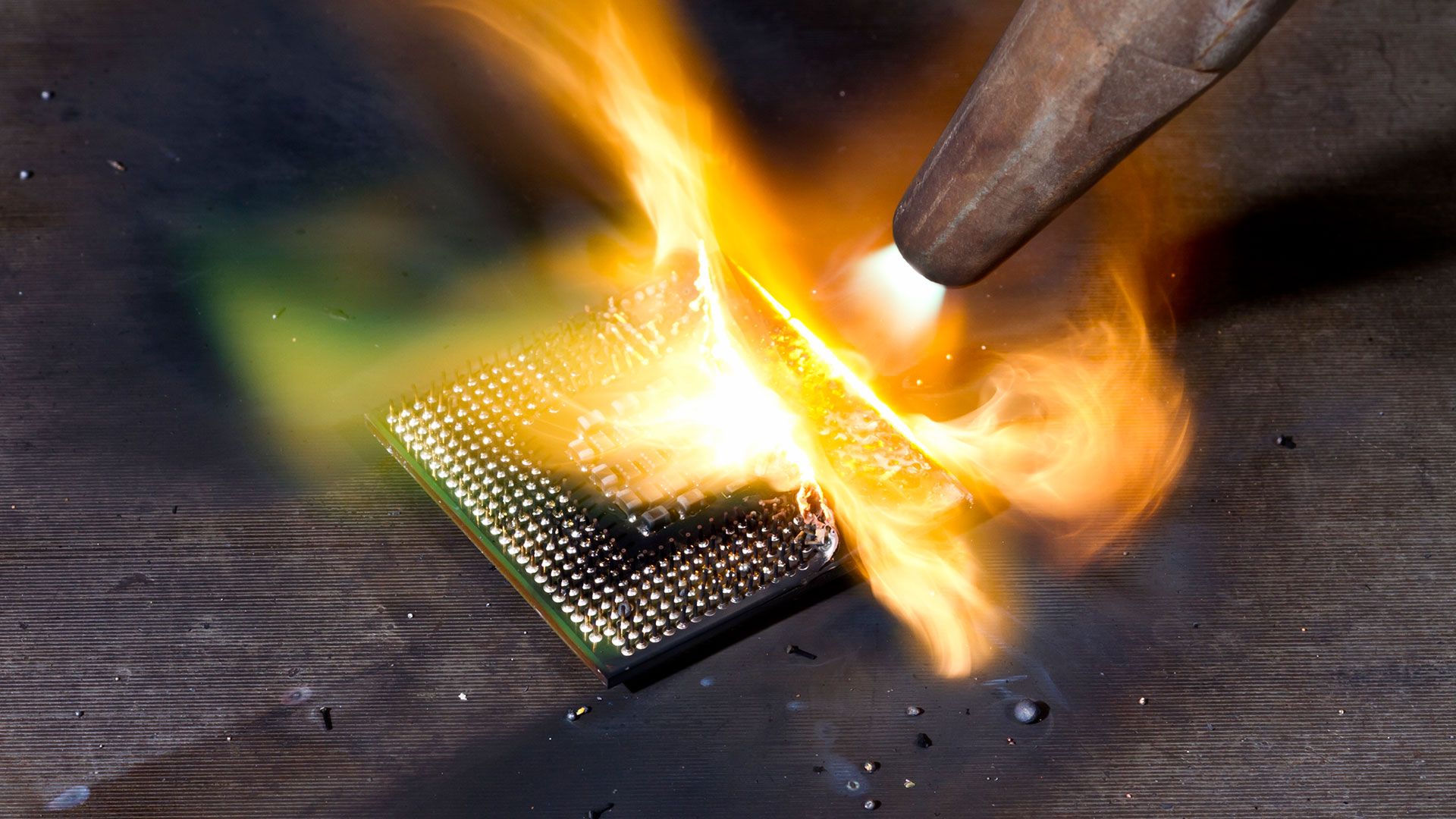
The biggest risk is damaging the die. Excessive heat can crack the silicon or cause the PCB to warp. Applying too much force with the knife may snap the processor in half or break off the LGA pins necessary for socketing. Additionally, the solder joint (if present) can react unpredictably to rapid cooling, creating microcracks. The wood chopping block helps absorb shock, but it also poses a fire hazard if the blowtorch is misdirected. For these reasons, this method is not recommended for processors you intend to reuse; it’s purely for destructive analysis or academic curiosity.
What can you learn from a die shot after delidding?
A high-resolution die shot reveals the physical layout of the processor: the locations of cores, cache (L1, L2, L3), memory controllers, and IO blocks. For the Xeon Silver 4110, you can see its 8 core clusters, the ring bus interconnect, and the large SLC (system-level cache). This helps engineers and enthusiasts understand how Intel’s Skylake-SP architecture scales. It also gives insight into the manufacturing process, such as the density of transistors (14nm). The Hackinator’s photos are used for reference in reverse engineering or educational materials.
Is this blowtorch method recommended for typical PC builders or overclockers?
Absolutely not. Standard delidding tools, like an IHS removal kit or a 3D-printed clamp, cost under $20 and are far safer. The blowtorch method is only for those willing to sacrifice the processor for a die shot or extreme testing. Overclockers who want to replace TIM should use a proper tool to avoid breaking the chip. The Hackinator’s demonstration is entertainment, not a tutorial. Always follow manufacturer guidelines for thermal interface replacement—or accept that this method results in a 90% chance of bricking your CPU.
Related Articles
- New Robotic Control Software Enables Seamless Skill Transfer Between Different Robot Arms
- Decoding the Alienware 15: A Budget Gaming Laptop with Last-Gen Hardware and Mainstream Appeal
- How to Recruit Elite Open-Source GPU Driver Developers for Your Team
- Updated GPU and Driver Requirements for Rust's NVIDIA Target
- A Step-by-Step Guide to Quantum Processor Calibration Using NVIDIA Ising Open Models
- 10 Key Insights Into the NVIDIA–Ineffable Alliance for Next-Gen Reinforcement Learning
- New Open Standard SPIFFE Emerges as Critical Solution for AI Identity Crisis
- Apple and Intel's New Manufacturing Partnership: What It Really Means