GitHub Copilot CLI Modes: Interactive Collaboration vs. Non-Interactive Efficiency
Breaking: GitHub Copilot CLI Now Offers Two Distinct Modes to Streamline Developer Workflows
GitHub has officially detailed the two operational modes of its Copilot command-line interface (CLI): interactive and non-interactive. This clarification comes as millions of developers integrate AI-assisted coding into their daily routines.
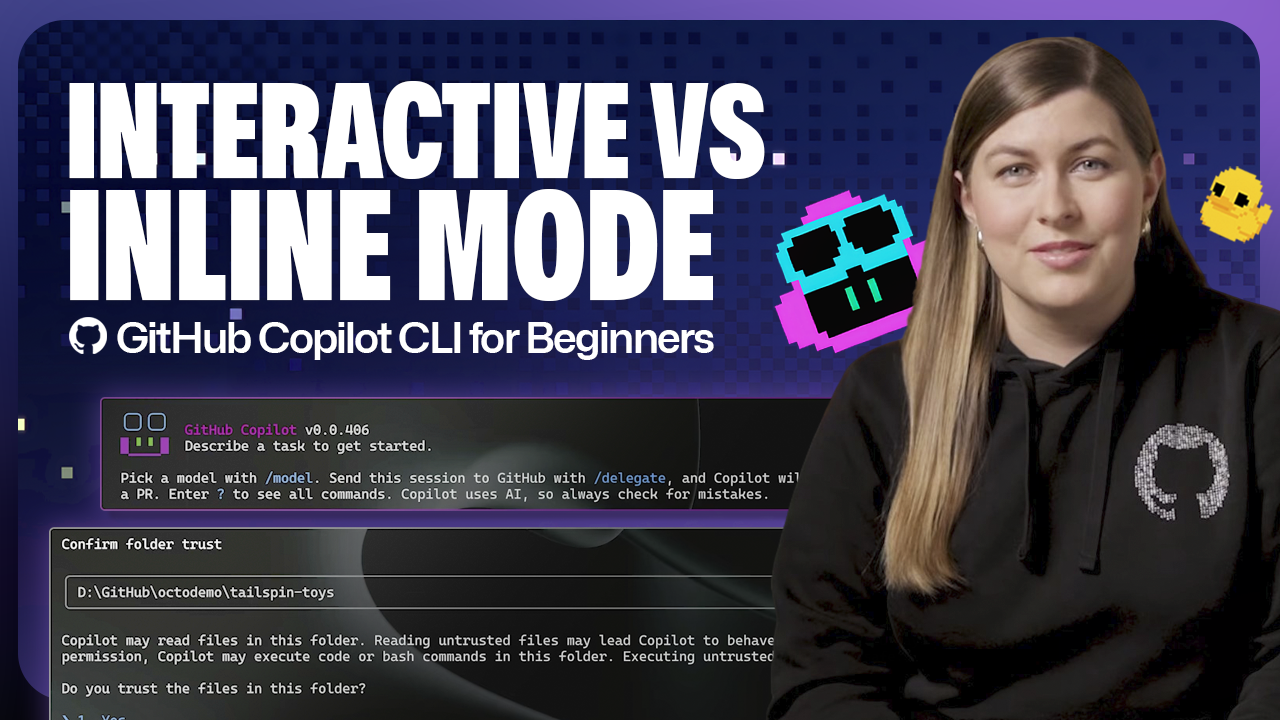
“The CLI is a powerful gateway for developers who want to stay in the terminal without context-switching,” said Dr. Sarah Chen, a developer advocate at GitHub. “Each mode serves a different purpose—interactive for deep, exploratory work, and non-interactive for fast, targeted questions.”
Interactive Mode: A Chat-Like Terminal Experience
By default, launching Copilot CLI places users into interactive mode. This mode creates a back-and-forth session where developers can ask questions, review suggestions, and issue follow-up prompts without leaving the command line.
To enter interactive mode, simply type copilot and press Enter. Copilot may request folder trust to read and modify files. Once inside, users can ask questions like “How do I run this project locally?” and then collaborate further by requesting, “Can you run it for me?”
This iterative workflow allows developers to analyze project structure, modify code, and test changes all within the same session. “It’s like having a pair programmer who never gets tired,” Chen added.
Non-Interactive Mode: One-Shot Prompts for Speed
Non-interactive mode is designed for developers who need a quick answer without engaging in a full conversation. Users pass a single prompt directly in the command line and receive an immediate response.
To use non-interactive mode, exit any existing Copilot session, then type copilot -p followed by your prompt, such as “Quickly summarize what this repository does and the key folders.” Copilot scans project files and returns the answer in seconds.
This mode is ideal for summarising repositories, generating code snippets, or integrating Copilot into automated CI/CD pipelines. “Once you get your answer, you’re back in your shell flow—no overhead,” Chen explained.

Background: The Rise of AI-Powered CLI Tools
GitHub Copilot CLI, built on OpenAI’s Codex model, was launched to bring AI assistance directly into the terminal. The tool complements GitHub Copilot’s IDE integration, offering a text-based interface for server environments, remote machines, and developers who prefer command-line tools.
Early adopters praised the tool for reducing context-switching and speeding up common tasks like reading documentation, writing scripts, and debugging. However, confusion around the two modes prompted GitHub to publish this official breakdown.
What This Means for Developers
The distinction between interactive and non-interactive modes enables developers to choose the right tool for each task. Interactive mode supports complex, exploratory problem-solving, while non-interactive mode handles routine, one-off requests.
“By understanding these two modes, developers can cut down on unnecessary back-and-forth and get more done in less time,” said Chen. “We expect this to become a standard part of every developer’s terminal toolkit.”
For those new to Copilot CLI, the official documentation provides step-by-step guides. Meanwhile, experienced users can leverage the interactive and non-interactive modes to build custom workflows and automate repetitive commands.
Related Articles
- Anthropic Co-Founder to Co-Present Historic AI Encyclical with Pope Leo XIV at Vatican
- Beyond Decision Trees: Why Modern Enterprise Workflows Need an Evidence-Driven Approach
- How to Set Up Swift in Your Favorite IDE Using Open VSX
- Gateway API v1.5: Major Update Brings Six Experimental Features to Standard Channel
- gcx CLI: Bringing Full Observability to Your Terminal and AI Agents
- From Code to Catacombs: How GitHub Copilot CLI Turns Your Repository into a Roguelike Game
- The Unknowable: How Mathematical Mysteries Power Secret-Keeping
- 10 Critical Insights for Governing AI Agents Safely in Your Enterprise