How NASA's Psyche Spacecraft Captured Mars' South Pole During a Critical Flyby: A Step-by-Step Guide to the Mission Milestone
Overview
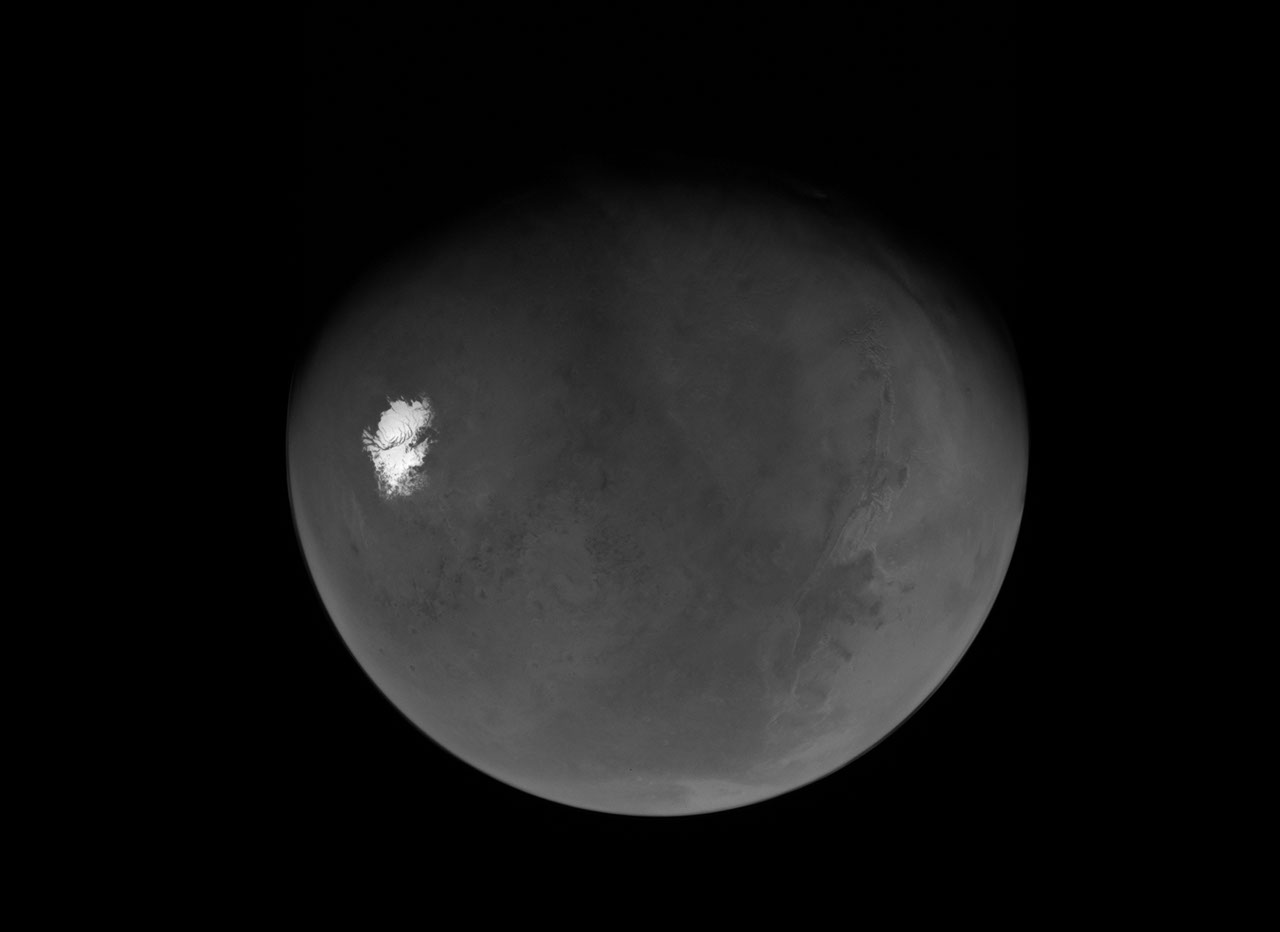
On May 15, 2026, NASA's Psyche spacecraft performed a critical flyby of Mars, using the planet's gravity to adjust its trajectory toward the main asteroid belt. During this maneuver, the spacecraft captured its first nearly full-disk view of Mars, revealing the south polar cap and extending northward to the vast Valles Marineris canyon system. This guide explains the science, navigation, and imaging behind this milestone—and what comes next as Psyche heads to its namesake asteroid.
Prerequisites
To fully understand this tutorial, you should have:
- Basic knowledge of planetary flybys and gravity assists
- Familiarity with solar system bodies (Mars, asteroid belt)
- An interest in NASA deep space missions and spacecraft operations
No advanced mathematics or engineering background is required, but we will reference orbital mechanics and spacecraft subsystems.
Step-by-Step Instructions
Step 1: Understand the Psyche Mission's Ultimate Goal
The Psyche mission is designed to explore (16) Psyche, a large metal-rich asteroid in the main belt between Mars and Jupiter. Scientists believe it may be the exposed iron-nickel core of an early planetesimal—a building block of terrestrial planets. By orbiting this world for 21 months, the spacecraft will test theories about planetary differentiation and the formation of rocky bodies.
Step 2: Recognize Why a Mars Flyby Was Needed
To reach asteroid Psyche, the spacecraft uses solar-electric propulsion (SEP), which provides high fuel efficiency but low thrust. A gravity assist from Mars gives a significant boost, altering the probe's orbit without burning extra propellant. The flyby on May 15, 2026, was carefully planned to increase the spacecraft's heliocentric velocity and set it on a direct course to the asteroid.
Step 3: Trace the Flyby Trajectory
Before the flyby, Psyche was traveling along an Earth-return trajectory. The Mars encounter changed its path, bending it toward the outer solar system. At closest approach, the spacecraft flew within about 1000 kilometers of the Martian surface—a safe distance while still obtaining a strong gravitational effect. After the flyby, SEP resumed to fine-tune the trajectory.
Step 4: Capture the First Image of Mars' South Pole
The image was taken shortly after closest approach, when Mars appeared as a nearly full disk from Psyche's perspective. The spacecraft's Multispectral Imager—a two-camera system—captured this composite. The view extends from the bright south polar cap (composed of frozen carbon dioxide and water ice) northward across the southern highlands to the equatorial region where Valles Marineris is visible. This is the mission's first look at a full planet since launch.
Step 5: Interpret What the Image Reveals
The image quality allows scientists to observe seasonal polar cap changes and large-scale surface features. Comparisons with previous Mars orbiter data will help calibrate Psyche's instruments and refine imaging techniques for the asteroid encounter. The south polar cap's extent in mid-May 2026 corresponds to late southern spring on Mars.

Step 6: Resume Propulsion and Set Course for the Asteroid Belt
With Mars in the rearview mirror, the spacecraft's SEP system (using xenon gas ion thrusters) will operate almost continuously to accelerate the probe toward the main asteroid belt. This low-thrust burn will be conducted in long-duration maneuvers over several months, gradually raising Psyche's orbit.
Step 7: Arrive at the Asteroid in August 2029
After a cruise of about three years, Psyche will insert itself into orbit around asteroid (16) Psyche in August 2029. Orbit insertion uses a series of braking maneuvers, again with SEP thrusters, to reduce relative velocity. Once captured, the spacecraft will begin a systematic survey from decreasing altitudes—down to 80 kilometers above the surface—mapping surface composition, topography, and gravity.
Common Mistakes
- Mistaking the flyby as a landing. The spacecraft never touched Mars; it performed a gravity assist at a safe distance.
- Thinking the image shows the entire planet. The view is a partial disk limited to the southern hemisphere and equatorial region, though it extends to Valles Marineris.
- Assuming the mission arrived at the asteroid immediately after the flyby. The flyby occurs in 2026, but arrival is not until 2029—a nearly three-year cruise.
- Confusing Psyche (the spacecraft) with its target. The mission name and asteroid share the same name, which can cause mix-ups.
- Overlooking the role of solar-electric propulsion. SEP is essential for the orbital insertion and stationkeeping; chemical thrusters are only used for attitude control.
Summary
NASA's Psyche spacecraft successfully executed a Mars gravity assist on May 15, 2026, capturing the first nearly full-disk view of the Martian south pole. The flyby was a critical step in the mission's trajectory to the asteroid belt, allowing the probe to adjust its course while conducting valuable science. Following this event, the spacecraft resumed its solar-electric propulsion and is on track to enter orbit around (16) Psyche in August 2029. This milestone demonstrates the precision of planetary navigation and the dual-use capability of deep space flybys—both for gravity assists and for acquiring scientific imagery.
Related Articles
- Mars Rover Curiosity's Drilling Challenge: How a Stubborn Rock Got Stuck and Broke Free
- Mastering Long-Horizon Planning with GRASP: A New Gradient-Based Approach for World Models
- Artemis II Crew Celebrates Moon Mission by Ringing Nasdaq Closing Bell
- Urgent Warning: Pelagic Thresher Sharks on Brink of Collapse from Even Low Fishing Pressure
- JWST Reveals Intense Glow from Supermassive Black Hole in Galaxy M77
- Exclusive: Samsung S26 Ultra Display Fails Brightness Test, Expert Reveals
- Zero-Day 'PhantomRPC' Flaw Lets Attackers Seize Full Control of Any Windows System
- 8 Critical Facts About the SpaceX Rocket Debris Speeding Toward the Moon